Farmers markets, craft fairs, and outdoor festivals all share the same power problem. Your booth needs electricity for a card reader, booth lighting, a fan on a hot morning, and maybe a blender for samples or a tablet for inventory. A gas generator is the obvious answer, but generators are loud, they smell, they need fuel, and a growing number of markets and venues have banned them outright.
LiFePO4 lithium batteries offer a cleaner, quieter, and surprisingly practical alternative. Here is what outdoor vendors need to know about portable battery power before making the switch.
Why Generators Are a Problem at Outdoor Markets
Gas generators were designed for construction sites, not booth spaces. They produce carbon monoxide, require ventilation, and create enough noise to make conversation with customers difficult. Generators are one of the leading sources of non-fire carbon monoxide poisoning in the United States, which is why covered and indoor venues treat them as a serious safety hazard. The EPA outlines the risks and why generators require outdoor ventilation in its carbon monoxide poisoning prevention guidance.
At markets where vendors are packed close together, that exhaust and noise affects your neighbors, your customers, and your own sales environment.
Many Venues Now Ban or Restrict Generators
Indoor markets, covered pavilions, and events held at parks or public spaces often prohibit gas generators outright. Even at open-air markets, some organizers have started restricting them due to noise ordinances or neighbor complaints. If you have been told you cannot use a generator at your next event, you are not alone, and the trend toward generator-free markets is accelerating.
Lead-Acid Batteries Are Not Much Better
Some vendors switch to car batteries or deep-cycle lead-acid batteries as a workaround. These can power basic accessories, but they come with real drawbacks. A group 31 deep-cycle lead-acid battery can weigh 70 pounds or more. Hauling it in and out of a vehicle every weekend adds up quickly. Lead-acid batteries also lose voltage as they discharge, which means your devices may start getting inconsistent power by early afternoon on a busy market day.

How LiFePO4 Batteries Work for Market Setups
LiFePO4 (lithium iron phosphate) batteries are a different chemistry than the lithium-ion cells used in laptops or phones. They are specifically designed for deep-cycle use, meaning they can be fully discharged and recharged hundreds of times without significant capacity loss. They also maintain a stable voltage throughout the discharge cycle, which means your POS system and card reader get consistent power from the first transaction of the morning to the last one of the afternoon.
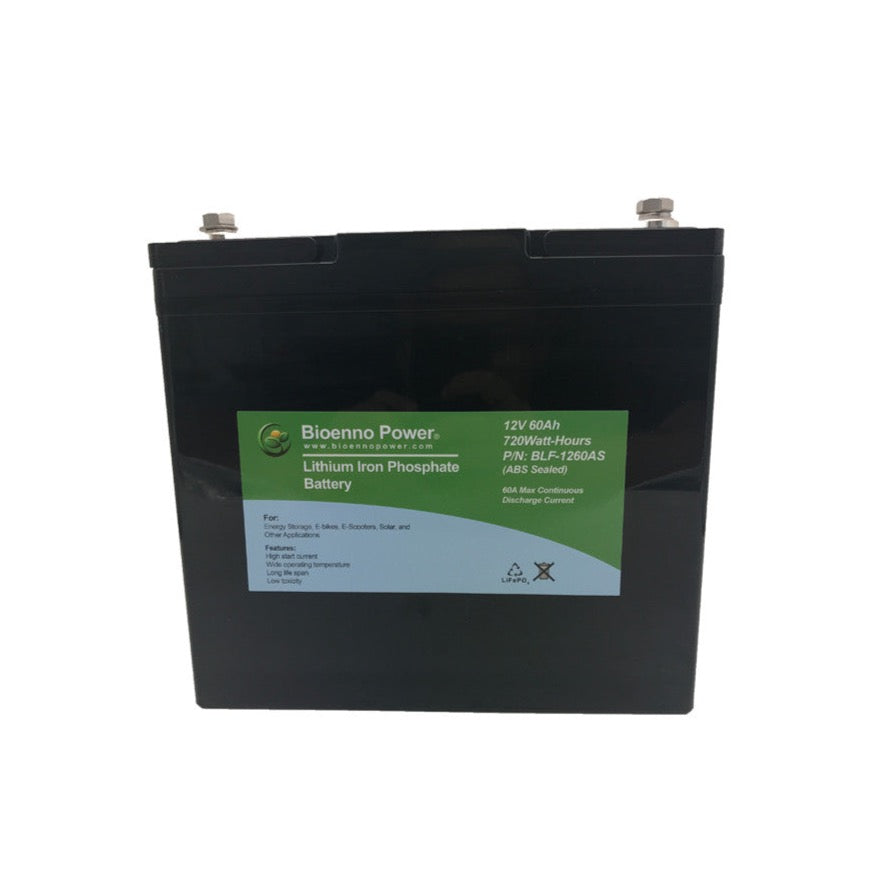
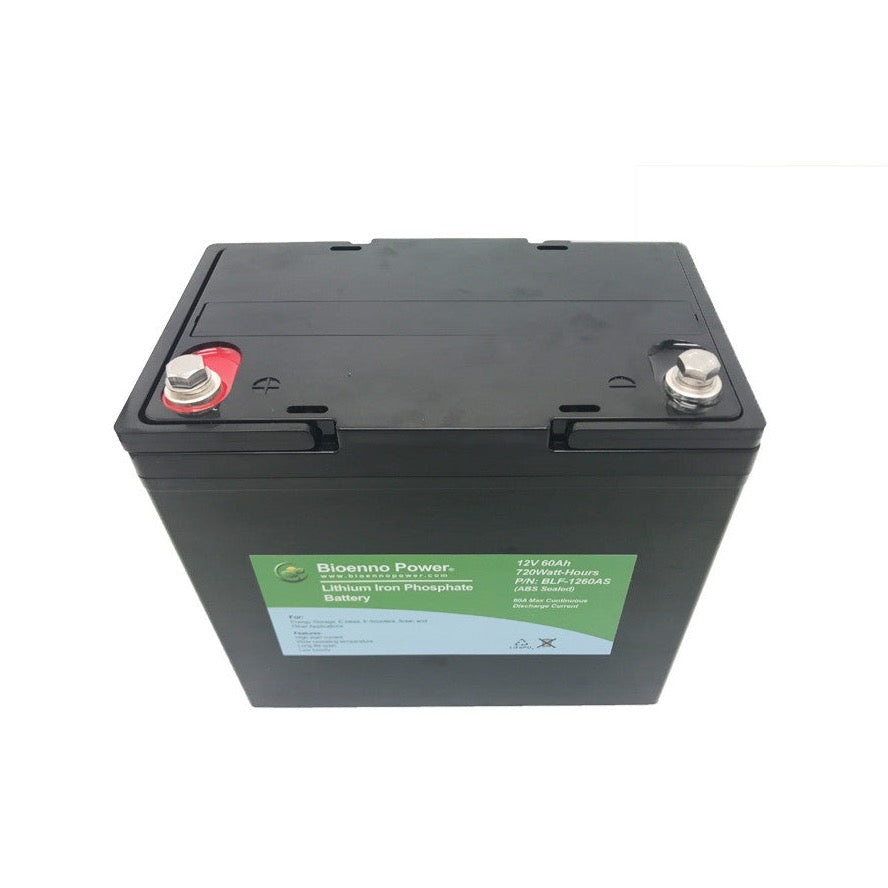
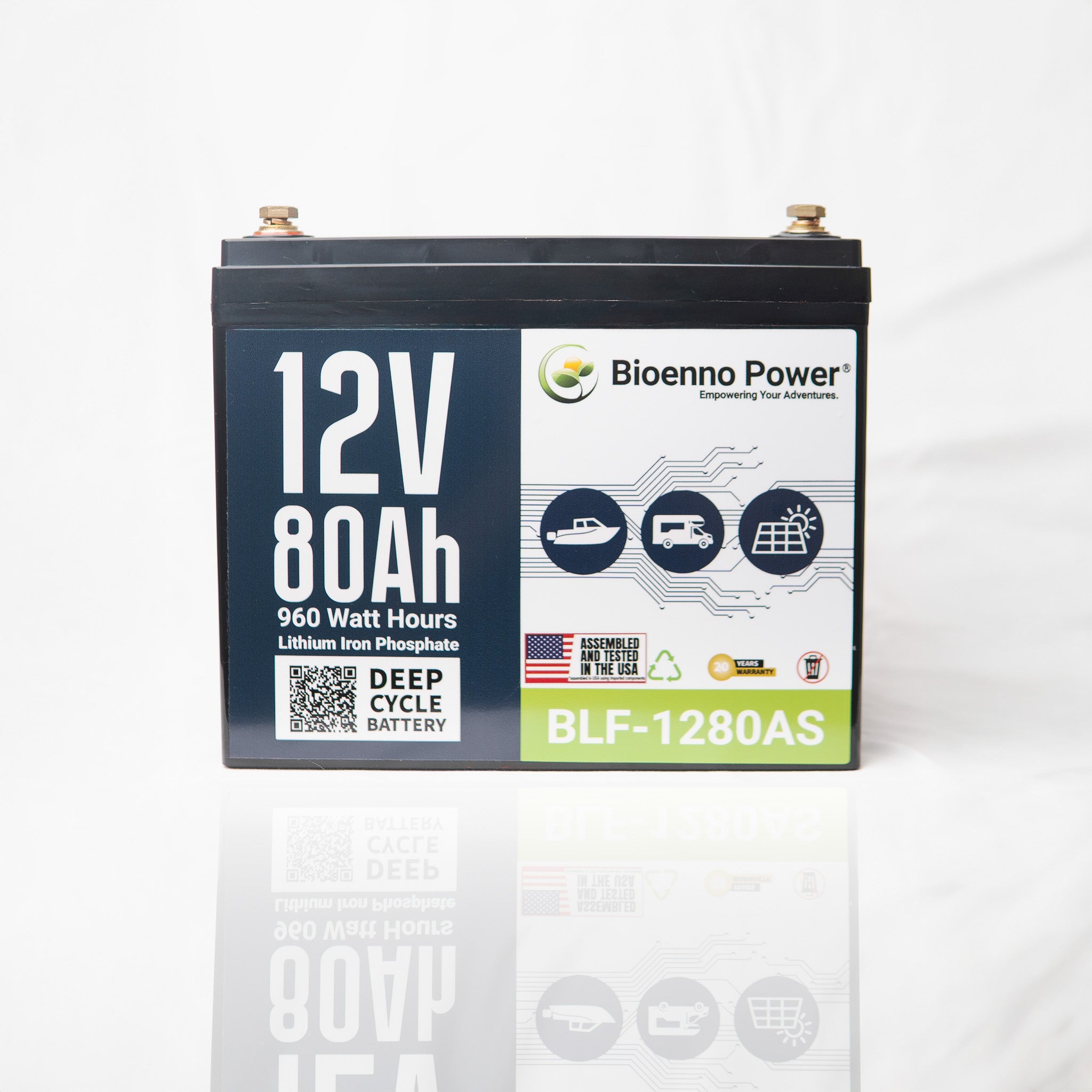
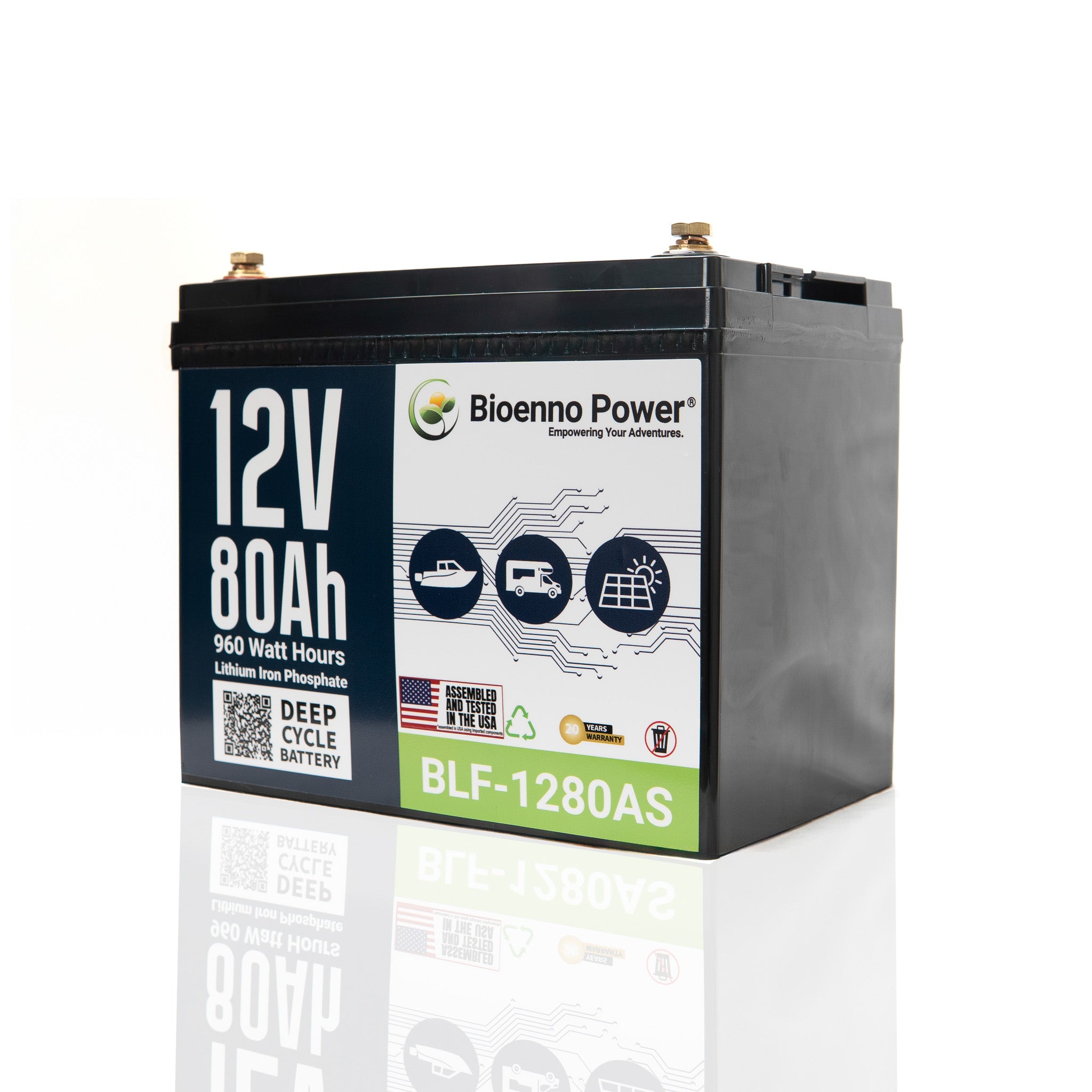
Bioenno Power batteries are assembled in Santa Ana, California, backed by a full replacement warranty, and designed around real-world portable and off-grid use cases. You can browse Bioenno's full range of LiFePO4 batteries organized by capacity and application.
Weight and Portability
One of the most immediate advantages for vendors is the weight difference. At around 9 pounds, the Bioenno 12V 30Ah is one of the lightest options at this capacity (). A lead-acid battery of comparable capacity can weigh three to four times as much. For someone who sets up and tears down a booth every Saturday morning, that difference is felt immediately in the parking lot.
How Long Will It Last
Runtime depends on what you are running. A typical vendor booth setup might include:
- A tablet-based POS system drawing 10-15 watts
- A card reader drawing 2-5 watts
- Two LED string lights drawing 10-20 watts combined
- A USB phone charger drawing 5-10 watts
That setup draws roughly 30-50 watts total. At 360 watt-hours, the Bioenno 12V 30Ah battery can realistically power that load for 6 to 8 hours, which covers most single-day market schedules. If you also run a small fan or blend samples occasionally, you will want more capacity. The 50Ah model handles that kind of mixed load comfortably, and the 60Ah gives you even more room to run through the day without watching a percentage bar.
For a deeper look at how to match battery capacity to your specific load, the guide on choosing the right battery for a full day off-grid walks through the calculation in a practical way.
What You Can Power at a Farmers Market or Craft Fair
Most vendor power needs fall into a few categories. LiFePO4 batteries handle all of them well at the right capacity.
Point-of-Sale and Payment Systems
Square, Clover, Toast, and similar tablet-based POS systems all run on USB-C or standard 12V power. A compact battery can keep these running for an entire event with capacity to spare. Card readers themselves draw very little power. The key is confirming that your inverter or DC output matches the input voltage and connector type for your specific tablet before market day.
Lighting
LED lighting is a strong match for battery power because modern LEDs draw so little current. A vendor booth with two or three LED string lights or a couple of LED spotlights typically draws under 25 watts total. At that draw rate, even a compact Bioenno battery can power your lighting for well over 8 hours on a single charge.
Fans, Blenders, and Small Appliances
Small fans draw between 15 and 50 watts, which is manageable for most battery setups. Blenders are more demanding, typically 300-600 watts for a standard model. If you blend samples regularly, calculate your total daily blending time and factor that into your battery sizing. Short bursts of high-wattage use are easier to budget than continuous loads, and LiFePO4 batteries generally handle surge current better than lead-acid options in the same weight class.

Recharging Your LiFePO4 Battery Between Market Days
One practical advantage of LiFePO4 over lead-acid is that recharging is faster and more complete. A quality LiFePO4 charger can bring a 30Ah battery back to full in 3-5 hours, depending on the charger's output rating. Most vendors recharge overnight at home the night before their next event, which fits naturally into a weekly market schedule.
Using Solar to Stay Topped Up
If you do multi-day festivals or regularly sell at markets without access to an outlet or grid power, a small folding solar panel can keep your battery topped up during the event itself. Bioenno offers compatible solar panels and charge controllers you can pair with any battery in the lineup. For an overview of how solar charging works with LiFePO4 batteries, the beginner's guide to solar charging LiFePO4 batteries is a useful starting point before sizing a panel.
Charging from Your Vehicle
You can also recharge a LiFePO4 battery from your vehicle's alternator while driving to and from the event. This is a common approach for vendors who travel longer distances between markets and want to arrive with a battery that is already partially recharged from the road.
Why LiFePO4 Lasts Longer Than Cheaper Alternatives
The battery market includes a lot of lithium options at varying price points, and the differences matter for a use case like this. LiFePO4 chemistry is the most stable and longest-lasting of the commonly available lithium types. Bioenno batteries are rated for 2,000 or more charge cycles at 80% depth of discharge. At one market day per week, that represents years of regular use before any meaningful capacity loss.
Generic lithium batteries sold at low prices often use different cell chemistry, lower-quality battery management systems, and lack the thermal protection that makes LiFePO4 a safer choice for enclosed spaces like a vendor tent. If you are powering the equipment that processes your sales, that difference matters. The comparison of cheap lithium batteries vs. LiFePO4 breaks down exactly what separates them.
Setting Up a Clean, Quiet Booth Power System
The simplest vendor power setup comes together in a few steps:
- Choose a Bioenno LiFePO4 battery sized to your estimated daily watt-hour load, with 20-30% extra headroom for variability.
- Add a small pure sine wave inverter (a device that converts battery power into standard AC outlet power) if any of your devices need standard AC outlets.
- Use DC-to-USB or DC-to-barrel-jack adapters for devices that accept 12V directly, since direct DC conversion is more efficient than converting to AC and back. For example, many tablets and card readers can charge directly from a 12V car-style port without needing an inverter at all.
- Recharge fully the night before your event.
This setup produces no exhaust, no noise, no fuel cost, and far less friction with neighboring vendors or market organizers. For more ideas on building a quiet, portable power setup for outdoor use, the post on silent power setups for campsites and outdoor events covers similar principles with practical examples.
You can browse Bioenno's full lineup of batteries, chargers, solar panels, and accessories. Shop the LiFePO4 battery collection to find the right capacity for a full market day.