A LiFePO4 voltage chart is the fastest way to estimate how much charge is left in your battery. It's also easy to misread. This guide gives ham, marine, and RV users a clear 12V, 24V, and 36V reference, then explains why voltage alone makes a rough fuel gauge and what the protection circuit does when a battery runs low.
One note before the charts. The full-charge, charging, and cutoff values come from Bioenno's own FAQ, product manuals, and solar controller specifications. Bioenno does not publish a percentage-by-percentage voltage table, so the in-between percentages are general LiFePO4 estimates and are labeled that way. Always check the manual for your exact model.
What a LiFePO4 Voltage Chart Tells You About State of Charge
State of charge is the percentage of usable energy left in a battery. A LiFePO4 voltage chart pairs resting voltage readings with those percentages so you can estimate what remains. Because the curve is flat, the chart is an estimate. Bioenno's manuals say the battery holds a steady voltage until very little capacity remains and advise against relying on voltage as an indicator of remaining capacity.
Resting voltage is what a meter reads after the battery has sat for a while with no load and no charger attached. Voltage under load is what you see while a trolling motor, radio, or fridge is pulling current. Not the same number. Mixing the two up is the most common reason a reading seems wrong.
Who benefits? Anyone who has to decide, right then, whether there's enough left. A Field Day operator planning one more hour on the air. An angler wondering if the trolling motor will get him back to the ramp. An RVer deciding whether to run the coffee maker before the sun comes up.
You may also see this called a lithium battery voltage chart, and the idea is the same. Just make sure the chart matches your battery's chemistry and nominal voltage (a chart built for one type of battery can easily mislead you on another).
Bioenno Reference Voltages for 12V, 24V, and 36V
These are the model-level numbers Bioenno publishes. Use them as your anchor points, then use the estimate tables below for the in-between steps.

12V LiFePO4 Voltage Chart From Full Charge to Empty
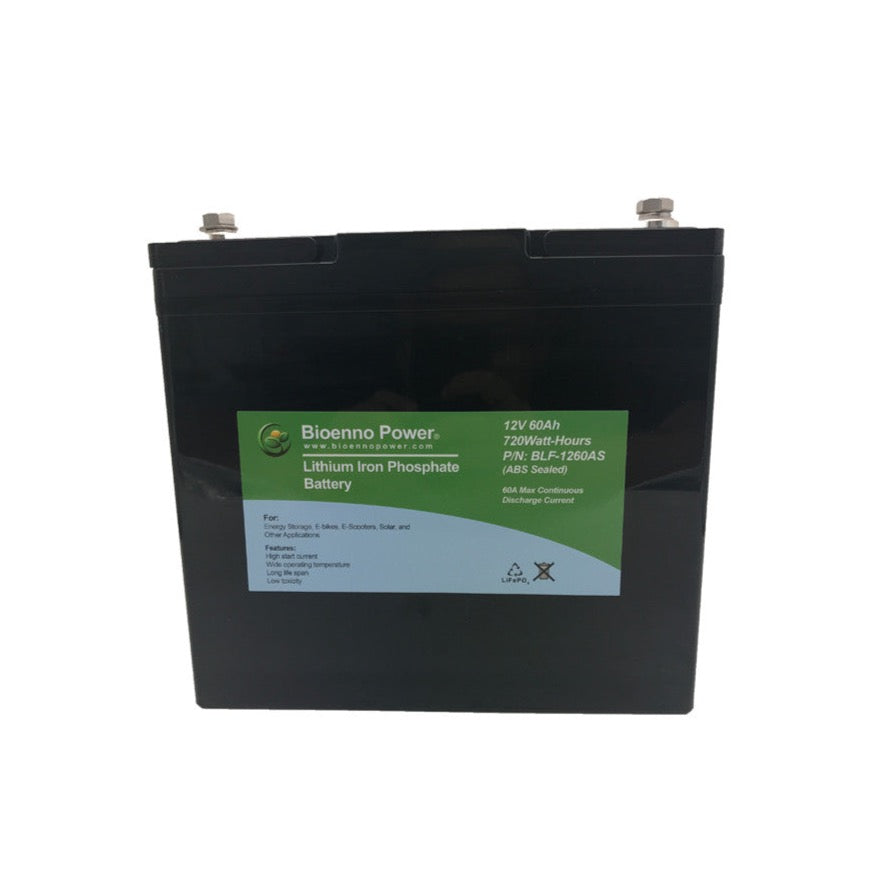
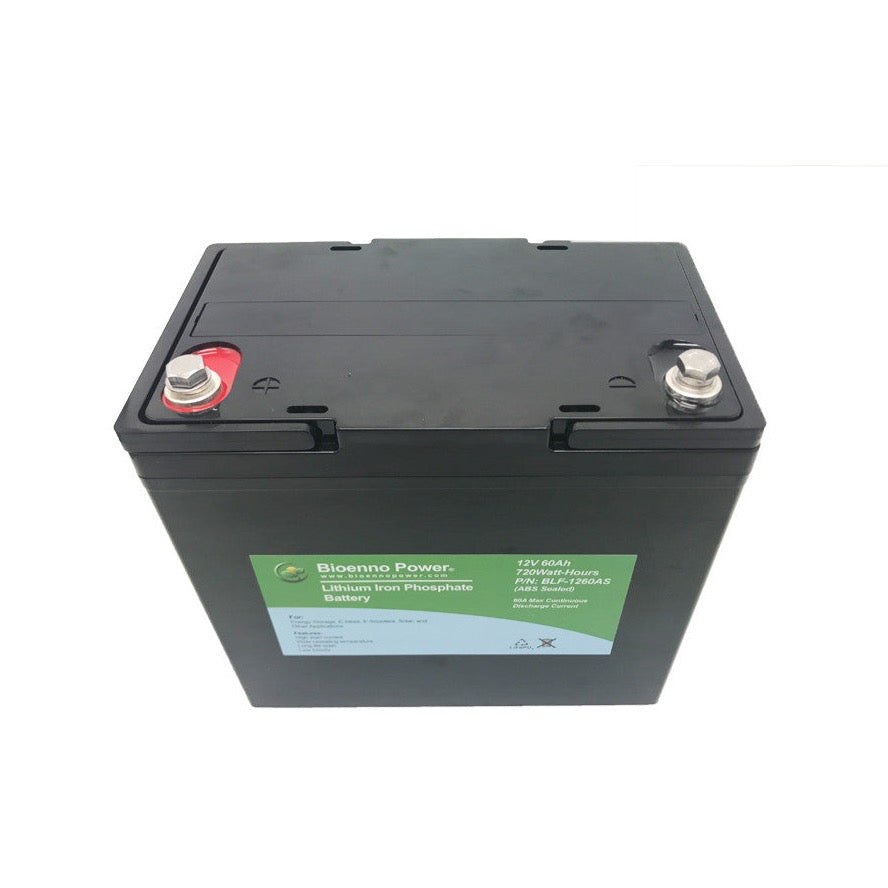
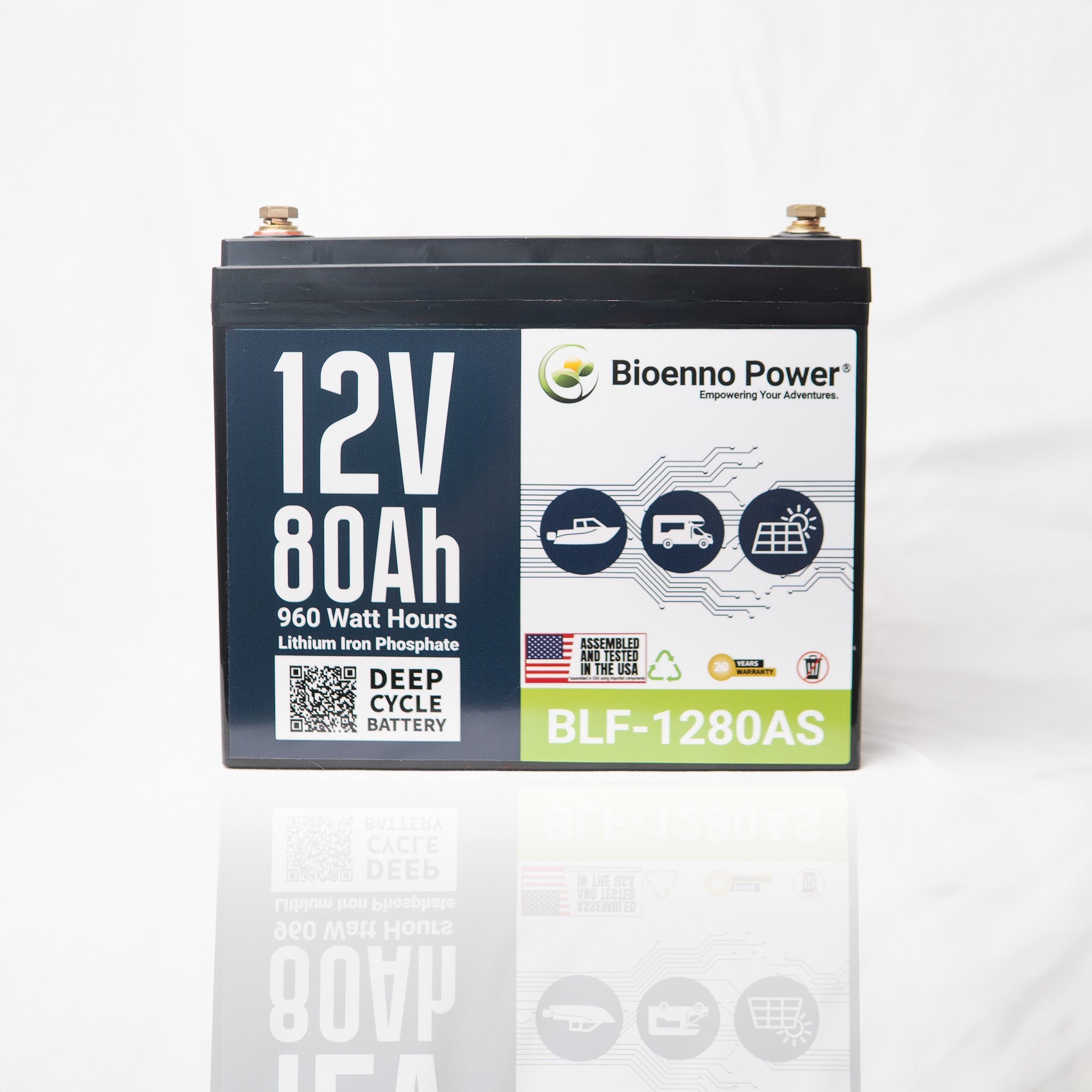
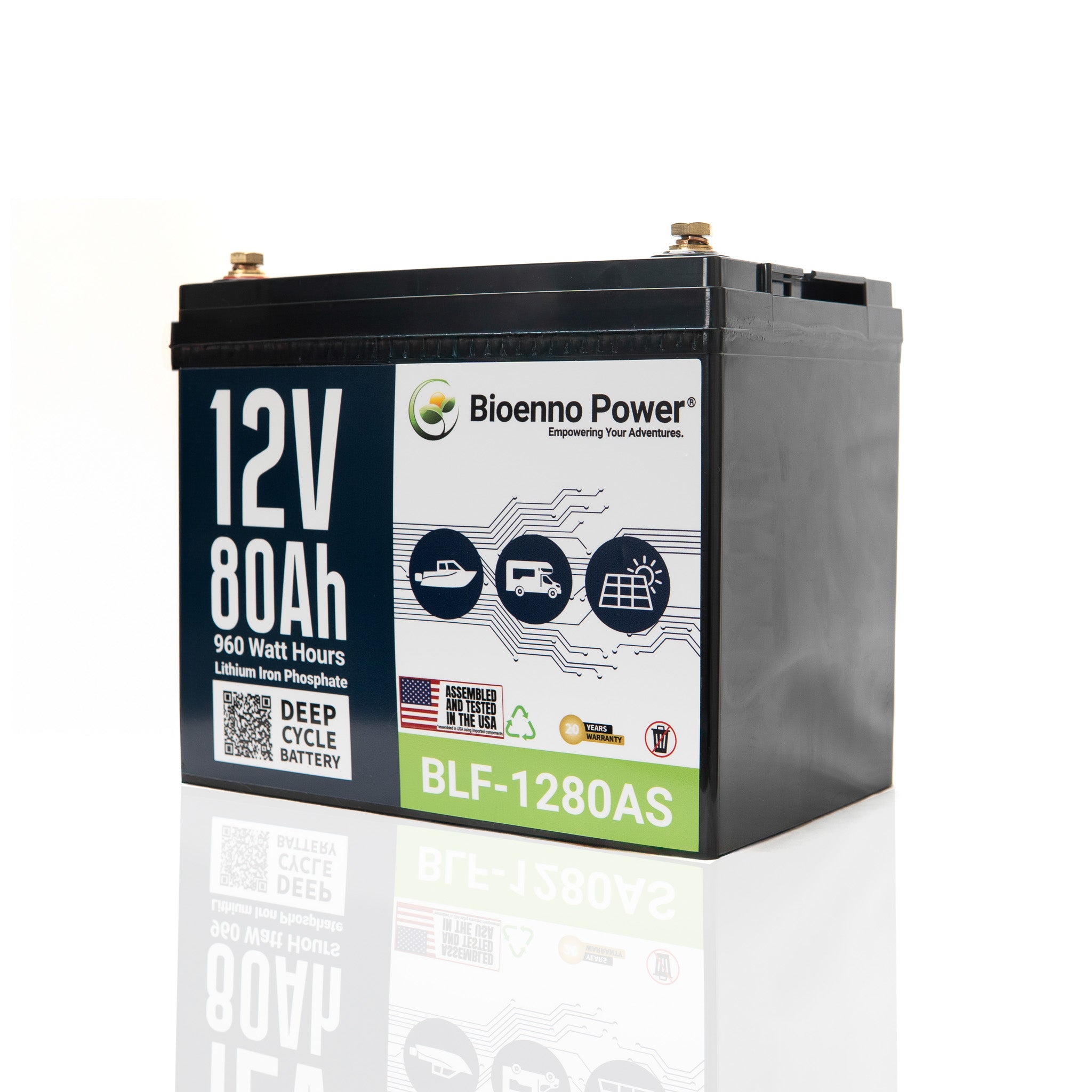
The 12V size is where most people start. It applies to a 12v lithium battery such as the 12V LiFePO4 batteries Bioenno sells for ham radio, marine, solar, and RV use.
The table below shows approximate resting voltage by state of charge for a 12V (four-cell) battery. These percentages are general LiFePO4 estimates, not necessarily Bioenno specifications.

Why a range at 100%? Bioenno lists 13.2V or higher as a full battery at rest, while general charts show about 13.6V. Real batteries vary by cell and protection circuit, so treat 13.2V and up as full.
Reading the 12V table
Think of the table as a rough ladder, not a precise ruler. Each row pairs a resting voltage with an approximate percentage, and the whole thing assumes the battery has rested with no load and no charger connected. Measure the moment you unplug a charger, or while something is running, and the number won't line up with any row.
Resting voltage versus charging voltage
Charging voltage is a different thing entirely. A charger pushes voltage higher than the battery would ever show at rest, so a reading taken mid-charge says nothing about state of charge. It only tells you the charger is working. Bioenno's 12V batteries charge at 14.6V and its 24V batteries at 29.2V. For charger settings, check your charger and battery manuals, and read our LiFePO4 charging profile guide.

24V and 36V LiFePO4 Voltage Charts for Trolling Motors and Larger Systems
Trolling motors are where higher-voltage packs earn their place. A 24V or 36V system gives the motor what it needs without stringing extra hardware together. The charts follow the same logic as the 12V table, but the numbers are higher, so never read a 24V or 36V battery against a 12V chart.
The 24V values are the per-cell figures multiplied by 8 cells, and the 36V values are multiplied by 12 cells. Bioenno's full-charge figures (26.4V and higher for 24V, 39.6V and higher for 36V) are the model-specific anchors. If you're building a larger bank, our separate post on series versus parallel wiring is worth a read. Note that some Bioenno batteries, such as the BLF-2430A, are not designed to be used in series.
24V LiFePO4 voltage chart
Running a 24V trolling motor? Look at the 24V LiFePO4 batteries to match the chart below to a real battery. Percentages are general estimates, not necessarily Bioenno specifications.

36V LiFePO4 voltage chart
Larger trolling motors are well suited to a 36V system, and the 36V LiFePO4 batteries are built for that job. Same resting-voltage rules apply. Percentages are general estimates, not necessarily Bioenno specifications.

Why Resting Voltage Is a Weak Fuel Gauge Under Load
Resting voltage is a weak fuel gauge because LiFePO4 holds a nearly flat voltage across most of its discharge. A large change in remaining capacity moves the reading only slightly, and load or recent charging shifts it further. Voltage is most useful near full and near empty, not in between.
The flat discharge curve
Oddly enough, this flatness is a strength. The battery delivers steady power for most of the day instead of fading gradually, which is exactly what many anglers and RVers hated about lead-acid. Lead-acid voltage drops steadily as it empties, so a voltmeter works as a rough gauge. Not so with LiFePO4. The middle of the curve is so level that 40 percent and 70 percent can look almost identical on a meter.
Honest near the ends, fuzzy in the middle. That's the chart in a sentence.
How load and recent charging skew the reading
Pull current and the voltage sags. Stop, and it drifts back up. After charging, the battery reads high for a while before it settles. Check the meter right after a long run on the trolling motor, or right as the solar controller finishes, and you're reading the event rather than the battery.
That's where a battery monitor earns its spot. Bioenno recommends a DC inline shunt wattmeter for the most accurate percentage remaining, because it counts energy in and out. Our post on how to read a LiFePO4 battery monitor walks through it. Use voltage as the sanity check and the monitor as the main gauge.

What the Protection Circuit Does at the Low End
Every Bioenno LiFePO4 battery includes a protection circuit (PCM/BMS) that guards against overcharge, overdischarge, overcurrent, and temperature extremes. When voltage falls too low, it disconnects the battery from the load to prevent damage. To the user, it looks like everything going dead at once: the radio, the fish finder, the lights.
Low-voltage cutoff and reconnect
Cutoff and reconnect points differ by model, so go by the figures in your battery's manual. For reference, Bioenno's LiFePO4 solar controller uses a low-discharge cutoff of 10.8V and a recovery of 12V on a 12V system, and a cutoff of 21.6V and a recovery of 24V on a 24V system. Those are controller settings, not the battery's internal protection thresholds. If the battery shuts off after a heavy draw, the manual says to disconnect the load and attach a LiFePO4 charger for a few seconds to reset it.
Why the cutoff is a safety net and not a gauge
Treat the cutoff as a last line of defense. Run to it regularly and you'll lose power at the worst possible moment, whether that's on the water far from the ramp or mid-transmission during an emergency net. Pair it with a monitor, plus a habit of checking the chart well before you get close. (Questions about lithium battery safety are covered in our post on whether LiFePO4 is safe.)
How to Tell When Your Battery Is Nearly Empty on the Water, on the Road, and in the Field
Here's a short routine you can repeat anywhere. A few minutes, most of it spent waiting.
- Switch off or disconnect loads, then let the battery rest.
- Read the resting voltage at the battery terminals with a reliable meter.
- Compare that reading to the chart for your battery's voltage.
- Think about the load you're about to run and how long you want it on.
- Confirm with a battery monitor if you have one, and plan to recharge sooner rather than later.
Ham radio and Field Day operators
For portable operations, a nearly empty reading means it's time to wrap up transmissions, not stretch them. Radios can behave oddly as voltage sags. Stop and recharge before it gets that far, and if you're choosing a battery for field setups, browse the ham radio LiFePO4 battery collection.
Marine and trolling motor users
On the water, a low reading is your cue to head in while there's still margin. Motor load pulls voltage down, so take the reading after a rest rather than while running. And don't count on the battery reaching cutoff and still carrying you home.
RV and van life boondockers
Off grid, a nearly empty battery means trimming the big loads first, then deciding when to run the solar or drive to recharge. Check resting voltage in the morning, before the sun and before the coffee maker. That's when the reading is most honest.
Storing your battery
For long-term storage, Bioenno's manuals say to fully charge the battery, then discharge it to about 50 percent. Do not leave it unattended for more than six months, and do not charge it below 0°C (32°F).
Can I use a 12V LiFePO4 voltage chart for a 24V battery?
No. Each battery voltage has its own set of values. Use the chart for your exact 24V or 36V battery, and confirm with Bioenno support if you are unsure.
Why does my battery voltage change right after charging?
A battery reads higher right after charging, then settles as it rests. For a reliable reading, let the battery sit with no load and no charger attached before measuring.
Is voltage enough to know my state of charge?
Voltage is a useful rough guide near full and near empty, but the flat discharge curve makes the middle hard to read. A battery monitor tracks energy in and out and gives a better picture.