You've got a trolling motor and you're ready to ditch the lead-acid batteries that have been slowing you down, literally and figuratively. But then comes the question that trips up more anglers than anything else: which voltage do you actually need, and how much capacity is enough?
Get it wrong and you're either underpowered on a 36V motor running off a single 12V battery, or you've overspent on capacity you don't need. Either way, you end up back on the water frustrated instead of fishing.
This guide walks through exactly how to match a LiFePO4 trolling motor battery to your setup, starting with voltage and covering the 7 specs that separate a battery that performs all day from one that leaves you stranded.
Why Voltage Is the First Decision You Need to Make
Before anything else, voltage determines whether your battery bank is even compatible with your trolling motor. This isn't a preference or an optimization. It's a hard requirement.
How 12V, 24V, and 36V Systems Work
Your trolling motor runs on DC power and is rated for a specific voltage system. 12V motors are the simplest, drawing power from a single 12V battery. 24V motors require either two 12V batteries wired in series or a single 24V battery. 36V motors need three 12V batteries in series or a dedicated 36V battery.
Wiring batteries in series stacks voltage while keeping amp-hour capacity the same. Two 12V/100Ah batteries in series gives you 24V/100Ah, not 24V/200Ah. That distinction matters a lot when you're sizing for a full day on the water.
Matching Voltage to Your Motor's Thrust Rating
A rough but reliable rule is that motors up to roughly 55 lbs of thrust are typically 12V, motors in the 70-80 lb thrust range are 24V, and motors at 80-115+ lbs of thrust run on 36V systems. That said, always confirm by checking the motor's nameplate or owner's manual since some manufacturers offer the same thrust rating in different voltage configurations.
For anglers running a Minn Kota Ultrex or Quest Series motor, Bioenno has specifically tested and confirmed compatibility with their 24V and 36V battery configurations, including the 80 lb and 115 lb thrust models. Bioenno's support team, including staff member Frank who led field testing for the Quest Series line, can confirm the right setup before you order.
What Happens When Voltage Is Wrong
Running a 24V motor on a single 12V battery doesn't just mean less power. It can damage the motor's electronics and void the warranty. Running a 36V motor on 24V gives you reduced speed and thrust that gets worse as the batteries discharge. Voltage mismatch is the most expensive mistake you can make at the battery stage, and it's entirely preventable.

The 7 Specs to Check Before You Buy a Trolling Motor Lithium Battery
Once voltage is settled, these are the seven specifications that determine whether a battery actually fits your fishing day.
- Nominal voltage
- Amp-hour (Ah) capacity
- Continuous discharge rate
- Battery Management System (BMS) quality
- Weight
- Charger compatibility
- Cycle life
Each one is covered in detail below.
Spec 1 and 2 - Voltage and Capacity (Ah)
Spec 1 is nominal voltage, which we've covered above. It must match your motor's requirement exactly.
Spec 2 is amp-hour (Ah) capacity, which determines runtime. A larger Ah rating means longer time on the water before recharge. As a rough field estimate, a 100Ah battery at 24V running a trolling motor at moderate speed (drawing around 20A) gives you approximately 4-5 hours of runtime. Heavy current draws, wind, and current reduce that significantly. (Best estimate based on standard amp-draw calculations; consult Bioenno support for your specific motor and use case.)
Spec 3, 4, and 5 - Continuous Discharge Rate, BMS Protection, and Weight
Spec 3 is continuous discharge rate, expressed in amps or as a C rating. Your motor's peak amp draw must fall within the battery's rated discharge current. A motor drawing 60A at full throttle needs a battery rated for at least that continuous output. Undersizing here causes the BMS to cut power at the worst possible moment.
Spec 4 is the Battery Management System (BMS), the internal protection circuit that guards against overcharge, over-discharge, short circuit, and thermal extremes. A quality BMS is what separates a LiFePO4 battery that lasts 2,000+ cycles from one that fails in year two. Bioenno's cells are USA assembled in Santa Ana, California and have undergone over 7 years of field testing across marine, RV, and off-grid applications.
Spec 5 is weight. A Group 31 lead-acid battery weighs around 60-70 lbs. A comparable LiFePO4 battery typically weighs 25-30 lbs. On a kayak or a bass boat where bow weight affects handling, that difference is substantial and directly affects boat performance, fuel efficiency, and your lower back.
Spec 6 and 7 - Charger Compatibility and Cycle Life
Spec 6 is charger compatibility. LiFePO4 batteries require a lithium-specific charger. A standard lead-acid charger can overcharge lithium cells or charge to an incorrect voltage profile, reducing capacity and shortening battery life. We'll cover this in more detail in the charging section below.
Spec 7 is cycle life. LiFePO4 chemistry is rated for 2,000 cycles or more at 80% depth of discharge, compared to roughly 300-500 cycles for a quality AGM battery. Over the lifespan of a fishing boat, that translates to a significantly lower cost per cycle. Bioenno backs their batteries with a comprehensive replacement warranty, which reflects the confidence they have in the build quality.
LiFePO4 vs Lead-Acid for Trolling Motors
If you're still on the fence about switching, this section is where the practical differences become very clear.
The Voltage Sag Problem with Lead-Acid
Lead-acid batteries don't deliver consistent voltage across their discharge cycle. They start strong and then voltage sags progressively as the battery depletes. What that looks like on the water is a trolling motor that runs slower and weaker as the day goes on, affecting boat control in current or wind exactly when you need full performance.
LiFePO4 chemistry maintains a flat discharge curve, meaning the motor runs at essentially the same speed whether the battery is at 90% or 20% state of charge. That flat curve isn't just a selling point; it's a real operational difference that tournament anglers and serious recreational fishers notice immediately.
Weight and Runtime Advantages of Lithium
Switching from two Group 31 lead-acid batteries (roughly 130+ lbs combined) to a LiFePO4 24V setup (as light as 50-55 lbs depending on capacity) removes a significant amount of dead weight from the bow. Beyond the weight savings, LiFePO4 batteries can be discharged more deeply (typically down to 20% state of charge) without damage, while lead-acid batteries should rarely be discharged below 50% without shortening their lifespan. That means you actually get more usable capacity from a same-Ah LiFePO4 battery.
What 7+ Years of Field Testing Actually Shows
Bioenno has been testing their marine batteries across bass boats, kayaks, and open-water setups for over seven years. Greg Blanchard, a well-known kayak fishing content creator, has featured Bioenno batteries in his kayak builds specifically because of the combination of lightweight and reliable full-day performance. The consistent feedback from field users is that lithium eliminates the end-of-day power fade that leads to lost fish and missed opportunities. You can see how Bioenno's marine batteries perform in a real kayak build in Greg Blanchard's full testimonial.
How to Size Your Battery Bank for a Full Day on the Water
Sizing a battery bank isn't complicated once you know your motor's amp draw (measured in amps, or A) at typical operating speed. Most trolling motor manufacturers publish amp draw charts in their owner's manuals or on their websites.
Calculating Amp-Hour Needs by Motor and Usage
Start by identifying the amp draw at the speed setting you use most. If you primarily run at 50-60% speed, use the amp draw at that setting rather than full throttle. Multiply that by the number of hours you fish in a day. Add 20-30% buffer to avoid deep discharge. That gives you your minimum usable Ah requirement. Then account for the fact that LiFePO4 gives you roughly 80% usable capacity safely, so a 100Ah battery gives you about 80Ah of practical runtime.
For example: a Minn Kota Terrova 80 drawing about 42A at 50% speed, fished for 6 hours, needs roughly 252Ah of raw capacity, or about 100Ah of usable LiFePO4 capacity after applying the 80% rule and a 20% buffer.
Running Multiple Batteries in Series vs Parallel
For 24V and 36V systems, you'll either use dedicated 24V or 36V batteries, or wire multiple 12V batteries in series. Series wiring increases voltage while maintaining the same Ah rating. Parallel wiring keeps voltage the same and increases Ah capacity. Do not mix batteries of different ages or capacities in series or parallel configurations, as uneven cells can cause premature failure and void your warranty.
Planning for Electronics, Livewells, and Accessories
If your trolling motor battery doubles as the power source for fish finders, livewells, lighting, or a Victron Smart Shunt, you need to add those amp draws to your daily calculation. Common accessories and their typical draw ranges include:
- Fish finder/chartplotter: 1-3A
- Livewell pump: 5-10A
- LED bow lighting: 1-2A
- Victron Smart Shunt or battery monitor: under 0.1A
- VHF radio (receive mode): 1-2A
These loads add up quickly on a 10-hour tournament day. Bioenno's support team can walk through your full electronics load with you to confirm the right capacity before you buy.

Charging a LiFePO4 Trolling Motor Battery the Right Way
Incorrect charging is one of the most common causes of premature lithium battery failure. This section covers what you actually need to know.
Why Your LiFePO4 Trolling Motor Battery Needs a Lithium-Specific Charger
LiFePO4 cells charge to 3.65V per cell, which means a 12V LiFePO4 battery charges to about 14.6V at full charge. A standard lead-acid charger set to AGM or flooded profiles will either stop short of full charge or push too much voltage. Neither is ideal. A lithium-compatible charger with a dedicated LiFePO4 profile is a required part of the system, not an optional accessory. Bioenno offers compatible chargers matched to their battery lineup so that pairing is never a guessing game. You can find the right charger for your battery and use case here: browse Bioenno's LiFePO4 charger lineup.
Charge Rates, Voltage Profiles, and What to Avoid
Charge rate is expressed as a C rating. Charging at 0.5C means you're charging a 100Ah battery at 50A, which gives you a roughly 2-hour charge time from depleted. Most lithium marine batteries can accept a 1C charge safely, but faster isn't always better for long-term cycle life. Slower, overnight charging at 0.2-0.5C is gentler on the cells. Never charge a LiFePO4 battery that is below freezing unless the battery has a built-in low-temperature cutoff, as lithium plating can occur and permanently reduce capacity.
On-Board Charging and Solar Compatibility
On-board chargers are convenient for boats with multiple battery banks. Make sure the charger supports LiFePO4 profiles explicitly, not just a generic "lithium" setting, since some chargers lump LiFePO4 and lithium-ion together despite different voltage requirements. LiFePO4 batteries are also fully compatible with solar charging through a quality MPPT (Maximum Power Point Tracking) charge controller set to the correct lithium profile, making them an excellent choice for kayak fishers and anglers who spend multi-day trips away from shore power.
Choosing the Right Bioenno Battery for Your Setup
Bioenno Power manufactures their LiFePO4 batteries in Santa Ana, California, with every battery backed by a comprehensive replacement warranty and USA-based support.
12V Setups and the Right Battery Models
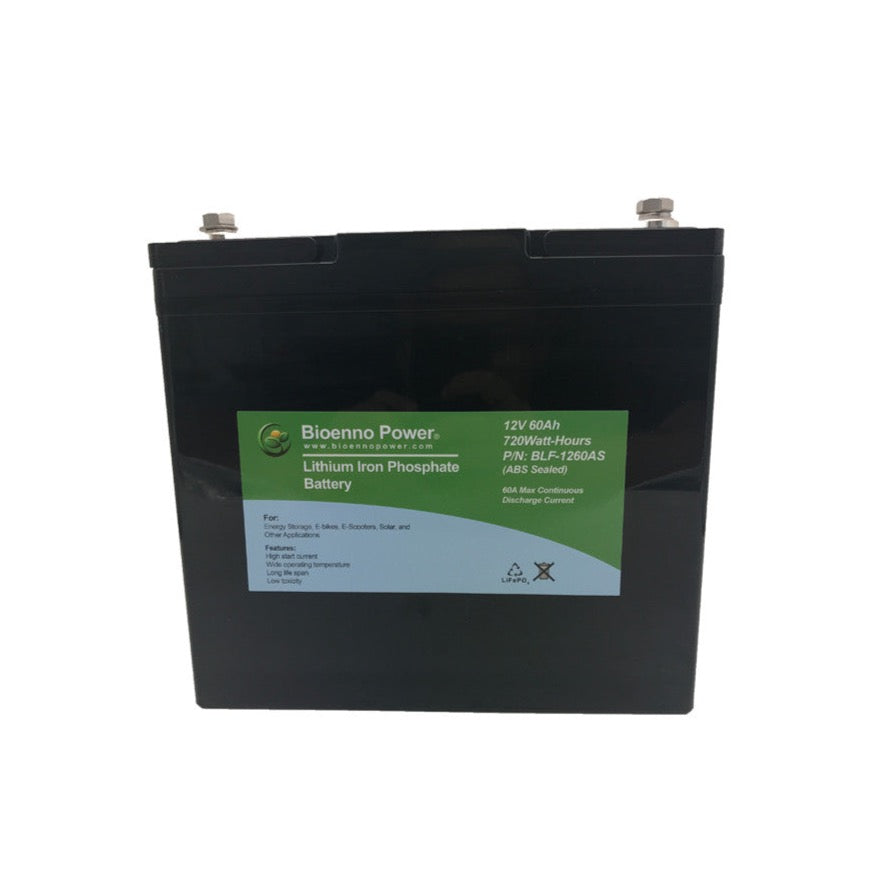
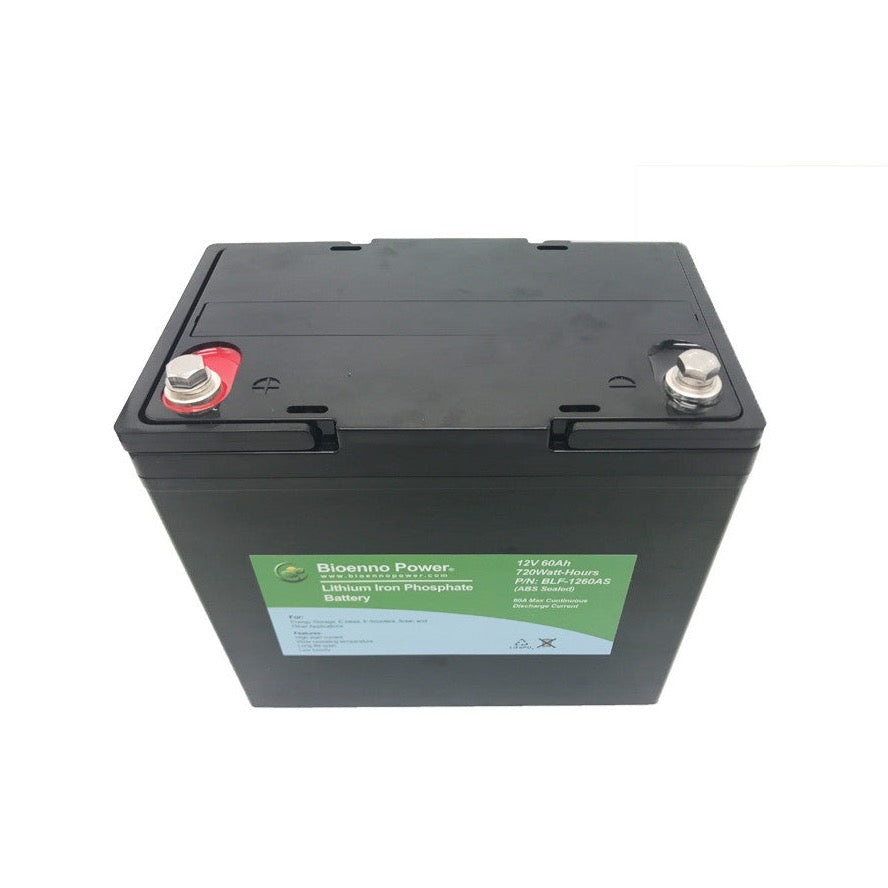
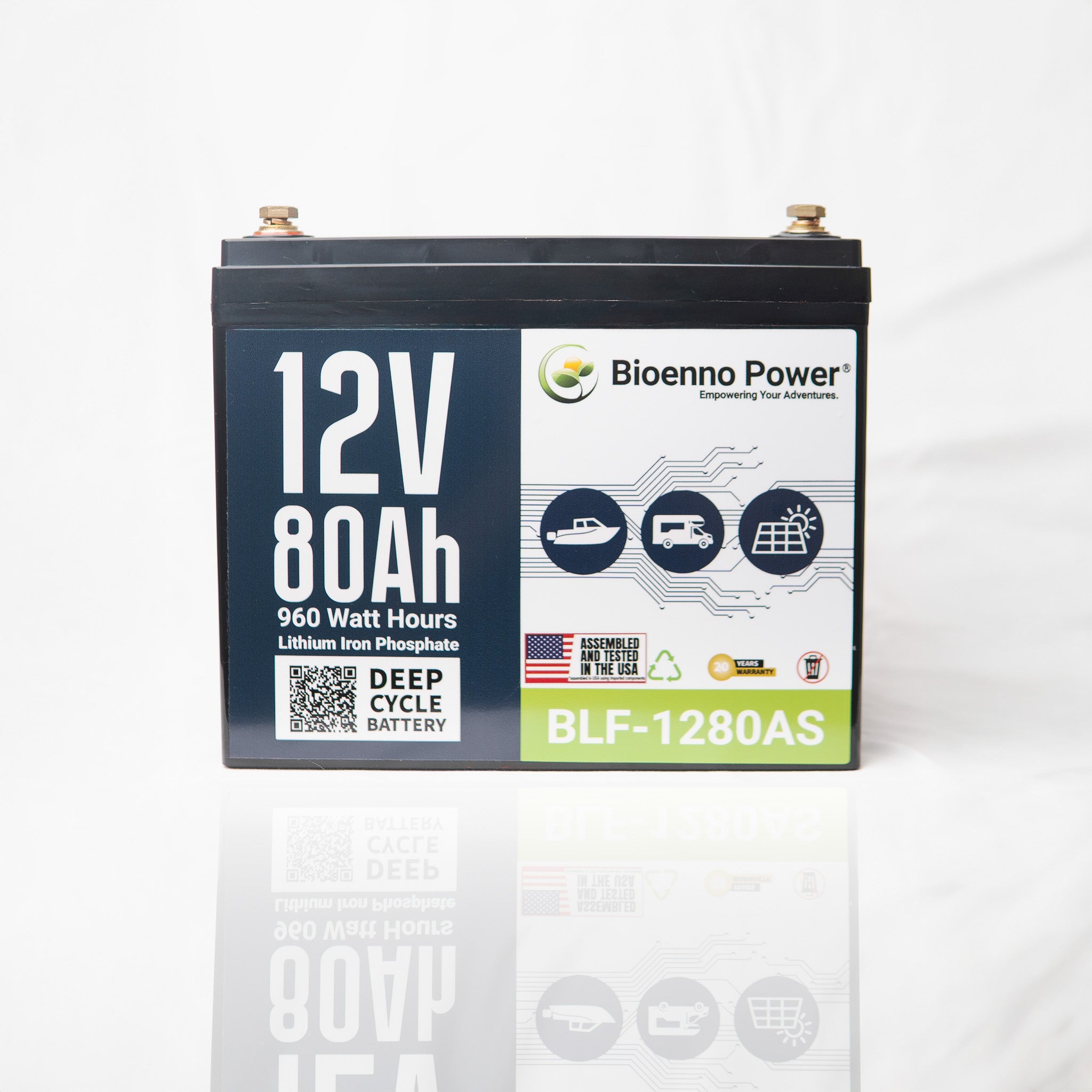
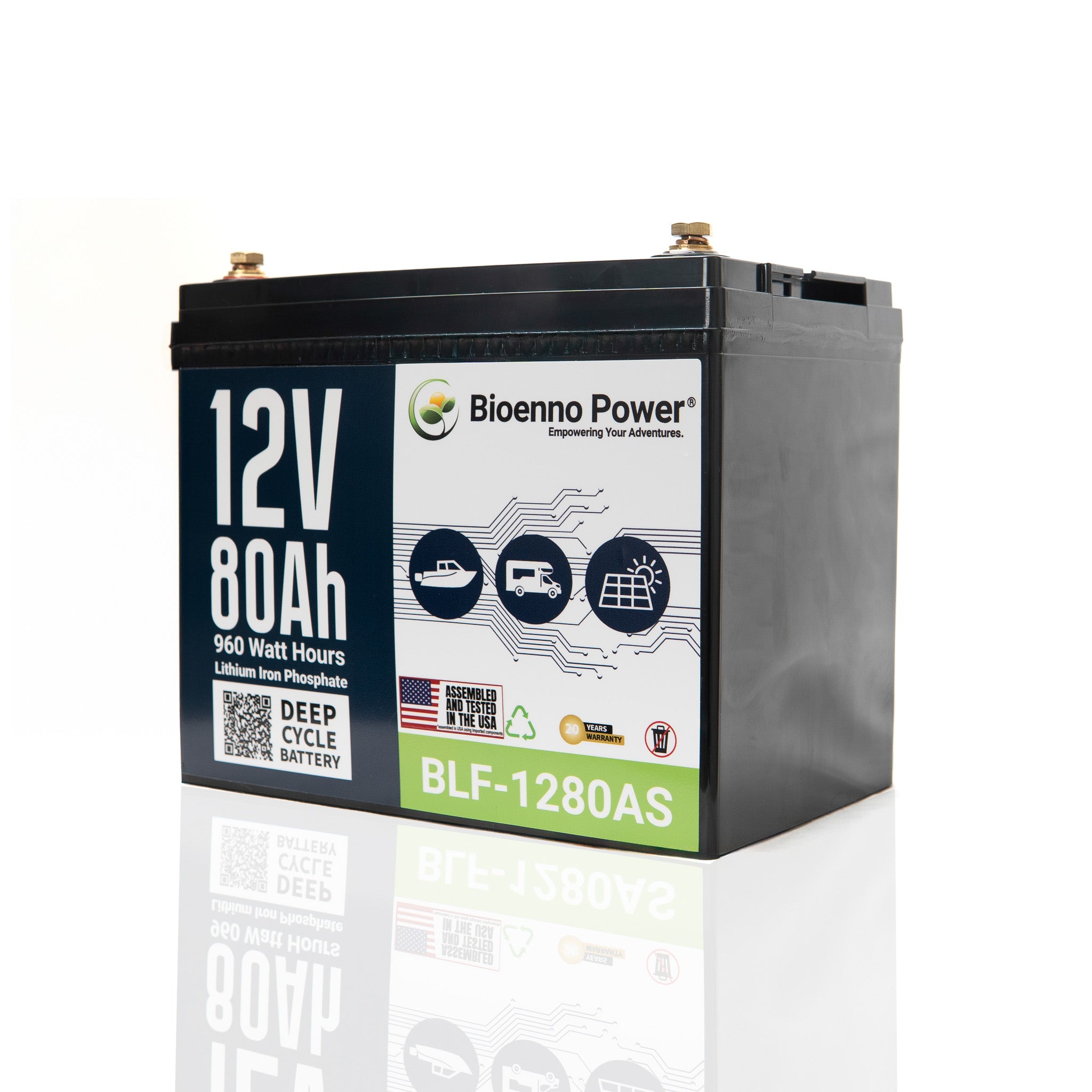
For anglers running a 12V trolling motor, a single 12V LiFePO4 battery is the cleanest setup. The capacity you choose depends on motor thrust and daily runtime. Lighter kayak motors typically do well with 50-75Ah; larger 12V bow-mount motors on jon boats benefit from 100Ah. Browse Bioenno's full LiFePO4 battery lineup to compare 12V models by capacity and form factor.
24V and 36V Configurations
For 24V and 36V motors, Bioenno offers both dedicated 24V and 36V batteries as well as 12V batteries designed for series wiring. The advantage of a single 24V or 36V battery over wired 12V batteries is simplified wiring and a smaller physical footprint. Bioenno's marine battery solutions page covers the recommended configurations for common trolling motor setups, including the Minn Kota Quest Series motors that Bioenno staff have specifically field-tested: explore Bioenno's marine battery solutions and recommendations.
For anglers powering additional boat electronics alongside their trolling motor, Bioenno's portable power packs offer a clean secondary power solution so you're not drawing down your motor bank: see Bioenno's portable power packs for boat electronics, camping, and travel.
How to Get a Confirmed Recommendation Before You Buy
The most common mistake anglers make when switching to lithium isn't picking the wrong brand. It's buying based on price without confirming voltage, amp-hour capacity, and discharge rating against their specific motor. Bioenno's support team is USA-based, responds to real questions from real anglers, and has field-tested these batteries across the setups most customers are running. Before placing an order, contact Bioenno support to confirm the exact battery configuration for your trolling motor and on-board electronics. Getting it right the first time is always cheaper than returning the wrong battery.