Whether you're rigging a 24V trolling motor for a full day on the water or building an RV solar bank that can run your appliances through the night, understanding how series and parallel wiring changes voltage versus capacity is the single most important step before you connect your first LiFePO4 battery. Get this wrong and you'll either damage your batteries, trip a BMS shutdown mid-tournament, or simply run out of power hours before you expected. Get it right, and your bank will deliver consistent, full-rated performance for years.
Series Wiring Adds Voltage While Keeping Capacity the Same
How the Positive-to-Negative Chain Works
In a series connection, you link the positive terminal of one LiFePO4 battery to the negative terminal of the next. Each battery's voltage stacks, so two 12V batteries become 24V and three become 36V, but the amp-hour capacity stays equal to that of a single battery in the string. The key mental model: voltage is additive, capacity is not. Think of it like stacking AA cells in a flashlight. Each cell adds to the total voltage, but the runtime is still determined by a single cell's capacity.
What Stays the Same and What Changes
Your output voltage climbs with every battery you add to the series string. Your amp-hour rating does not. So if you wire two 12V 100Ah LiFePO4 batteries in series, you get 24V at 100Ah, not 200Ah. That 100Ah ceiling matters when you're planning runtime for a full-day fishing trip or an overnight boondock. If you need more capacity at that higher voltage, you'll need to add parallel strings, which is covered below.
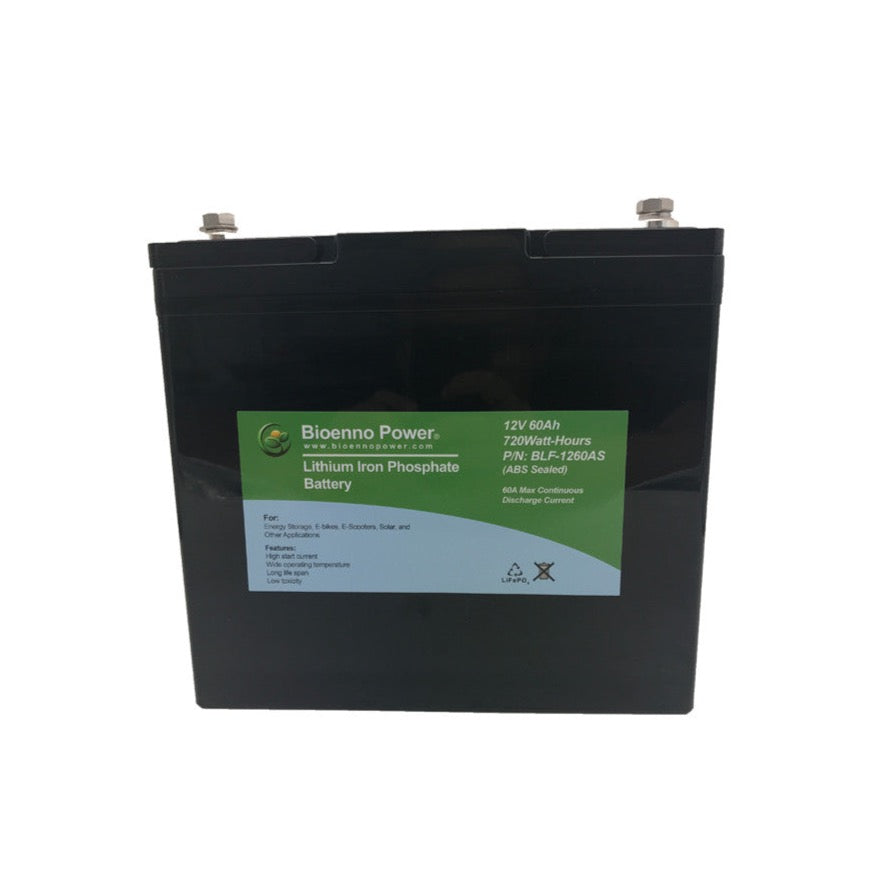
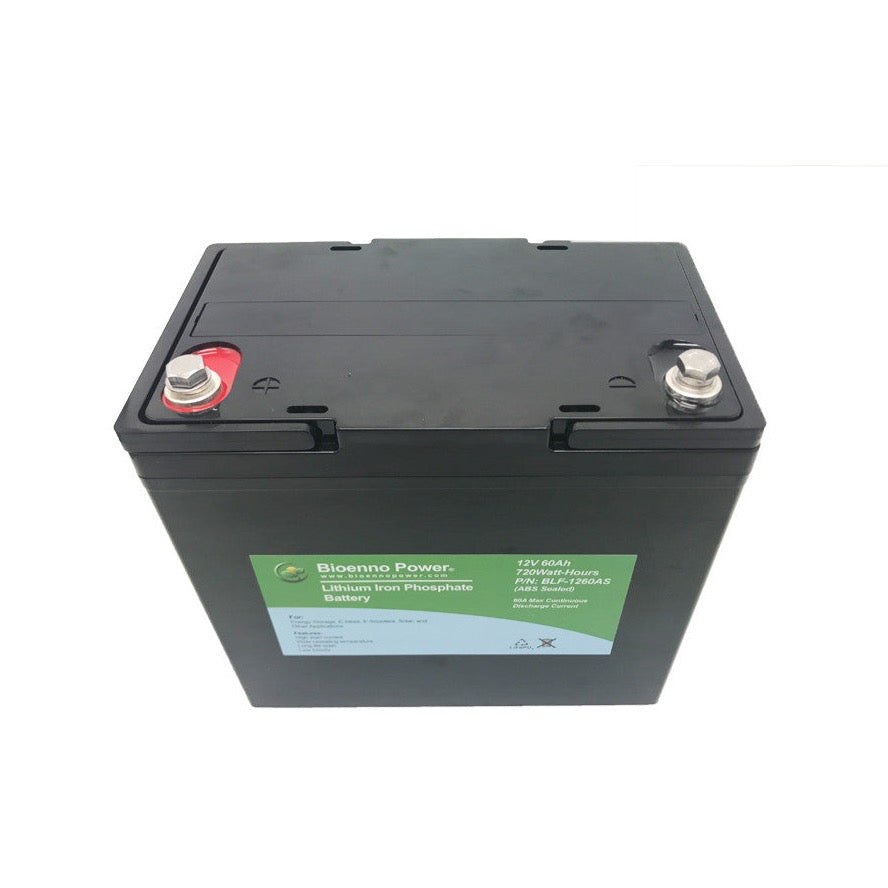
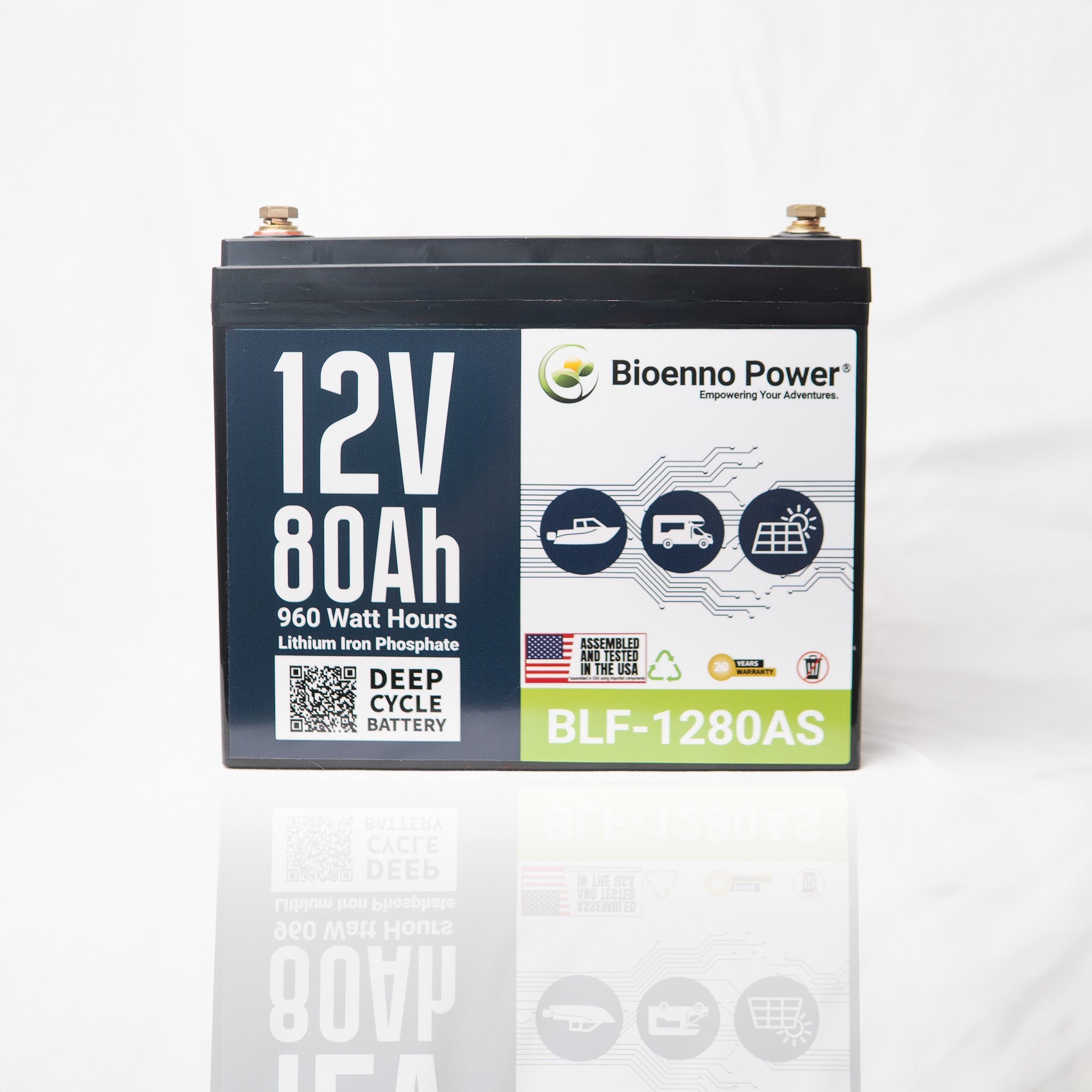
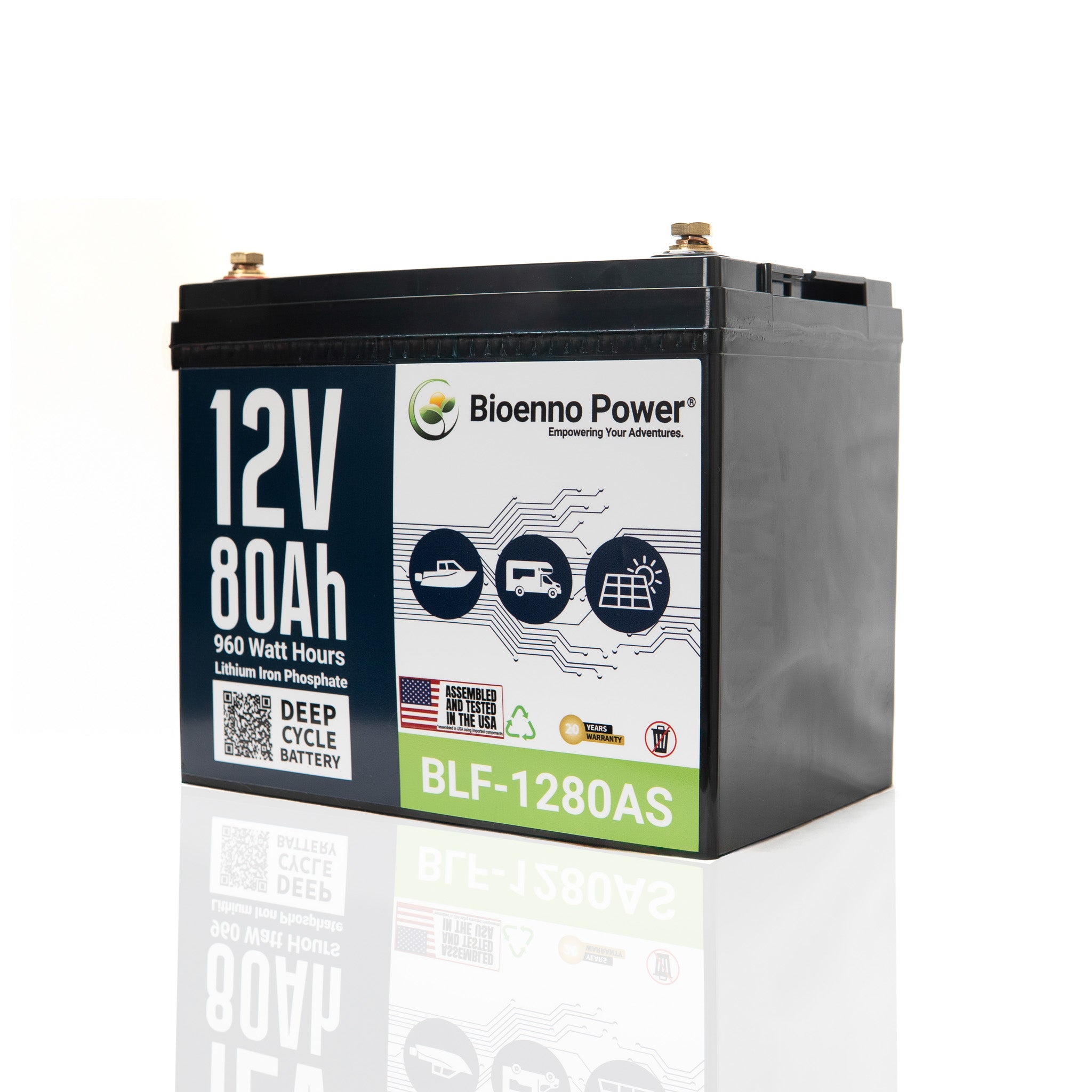
You can browse Bioenno Power 12V LiFePO4 batteries suitable for series wiring to find the right starting point for your bank. Matching the same model across all positions in a series string is critical, and more on that is covered in the balancing section below.
Parallel Wiring Adds Capacity While Keeping Voltage the Same
How the Positive-to-Positive and Negative-to-Negative Connection Works
In a parallel connection, you link all positive terminals together and all negative terminals together. Voltage stays at the nominal level of a single battery, but amp-hour capacity multiplies. Two 12V 100Ah batteries wired in parallel give you 12V at 200Ah, doubling your runtime. The batteries share the load evenly, so each one is working less hard than it would alone.
Parallel wiring is the right move when your system voltage is already correct but you need more hours on the water or more days off-grid. An RV running a 12V house bank, for example, doesn't need higher voltage. It needs more amp-hours to run the refrigerator, lighting, and fans through the night. Parallel is the answer. For a trolling motor that requires 24V or 36V, you'd first build the series string to hit the target voltage, then add parallel strings to increase runtime.

The 24V and 36V Trolling Motor Worked Example
Building a 24V Bank with Two 12V LiFePO4 Batteries
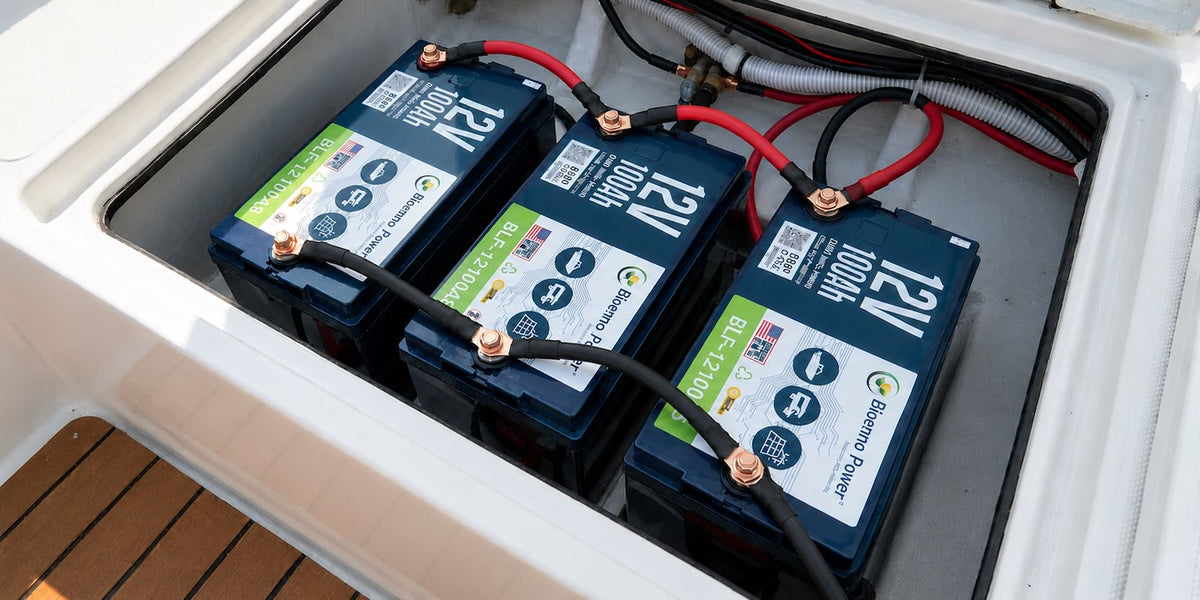
A Minn Kota or MotorGuide 24V trolling motor requires a 24V supply. The simplest way to get there with LiFePO4 is to wire two identical 12V batteries in series: connect the positive terminal of Battery 1 to the negative terminal of Battery 2, then take your positive output from Battery 2's positive terminal and your negative output from Battery 1's negative terminal. You now have 24V. If each battery is 100Ah, your bank is 24V 100Ah. You can shop Bioenno Power 24V LiFePO4 batteries for trolling motor banks if you prefer a single-unit solution that simplifies installation.
Building a 36V Bank with Three 12V LiFePO4 Batteries
Three 12V batteries in series gives you 36V, the voltage required by high-thrust motors like the Minn Kota Terrova 36V or MotorGuide Xi5 36V. Wire Battery 1 positive to Battery 2 negative, Battery 2 positive to Battery 3 negative, and draw your output from Battery 3's positive and Battery 1's negative. Three 12V 100Ah batteries in series yields 36V 100Ah. Bioenno Power also offers purpose-built 36V LiFePO4 batteries for trolling motor banks if you'd rather avoid the multi-battery series build entirely.
Adding Parallel Strings for More Runtime on the Water
If one series string doesn't give you enough runtime for a long tournament day, you can add a second identical series string and connect the two strings in parallel. Two 24V 100Ah strings wired in parallel give you 24V at 200Ah. Always complete each series string first, then connect strings in parallel. Never mix series and parallel connections in a disorganized way. That's where mistakes happen.
- Two 12V batteries in series = 24V (capacity of one battery)
- Three 12V batteries in series = 36V (capacity of one battery)
- Two 24V series strings in parallel = 24V with doubled capacity
- Two 36V series strings in parallel = 36V with doubled capacity
- Always confirm maximum series/parallel counts with Bioenno Power support for your specific model before wiring
Matching and Balancing Rules That Protect Your Battery Bank
Why Same Model, Same Age, and Same State of Charge Matter
Always use batteries of identical voltage, capacity, chemistry, and ideally the same production batch when building a series or parallel bank. Mismatched batteries force the stronger unit to compensate for the weaker one, accelerating degradation and risking BMS shutdowns. This isn't a guideline. It's a hard rule for LiFePO4 banks. A single weaker cell in a series string becomes the bottleneck for the entire bank, reducing your effective capacity and potentially triggering a low-voltage cutoff long before the other batteries are depleted.
Before connecting batteries in any configuration, bring them all to the same state of charge first. Charge each battery individually to full, then verify resting voltage with a multimeter. A difference of more than a few hundredths of a volt between units is worth investigating before you wire them together. Starting balanced keeps the BMS in each unit from fighting the others.
BMS Behavior in Multi-Battery Configurations
Each LiFePO4 battery in a Bioenno Power bank contains its own Battery Management System. The BMS monitors cell voltage, temperature, and current, and it will disconnect the battery if any parameter goes out of range. In a series string, if one battery's BMS trips, it breaks the circuit for the entire string. That's why matching and pre-balancing are so important. A BMS shutdown on the water is avoidable. Mismatched batteries are the most common cause. In parallel configurations, a tripped BMS on one unit shifts the full load to the remaining batteries, which can cascade into further shutdowns if the load is high.

Fusing, Wiring Gauge, and Safety Essentials for Multi-Battery Banks
Multi-battery banks carry more energy than a single battery, and that means short-circuit faults can release more energy faster. Proper fusing and correctly sized wire are not optional. Use marine-grade tinned copper wire rated for the maximum continuous current your system will draw, with an appropriate safety margin. Every battery bank should have an appropriately rated fuse or circuit breaker as close to the positive terminal of the bank as physically possible. This protects the wiring between the bank and the load, which is the most vulnerable section.
Wire gauge selection depends on your system voltage, maximum current draw, and cable run length. A 36V trolling motor running at peak thrust pulls significant current, and undersized wire creates resistance, heat, and voltage drop that robs you of performance. Use an AWG chart for your specific current and run length, and always round up to the next heavier gauge when you're near a boundary.
- Install a fuse or circuit breaker rated for your maximum load current, placed as close to the positive battery terminal as possible
- Use marine-grade tinned copper wire sized for your current draw and cable run length. When in doubt, go heavier
- Secure all connections with ring terminals and proper crimping tools; avoid push-on connectors for high-current applications
- Keep battery terminals and inter-battery cables clean, tight, and free of corrosion, especially in marine environments
- Never work on a live bank. Disconnect the load before making or changing any wiring connections
- Confirm maximum series and parallel counts for your specific Bioenno Power model by contacting Bioenno Power technical support before finalizing your build
Choosing the Right Configuration for RV and Solar DIY Systems
When to Prioritize Voltage vs. Capacity in an Off-Grid Build
Most RV and van life systems run on 12V house banks, which means parallel wiring is typically the right tool for increasing runtime. A 12V inverter, 12V compressor fridge, and 12V lighting all want 12V. Adding batteries in parallel keeps the voltage correct and stacks up the amp-hours you need for multi-day boondocking. Solar charge controllers and inverter-chargers are also typically sized for a specific system voltage, so changing your bank voltage mid-build means replacing those components too.
Some larger off-grid homestead systems or high-power inverter setups run at 24V or 48V to reduce wire size and improve efficiency at high current levels. If your system voltage is already defined by your inverter or charge controller, let that drive your battery configuration rather than working backward from the batteries.
Designing for Expansion from the Start
The single best thing you can do for a future expansion is buy all your batteries at once from the same batch. If that's not possible, keep detailed records of your initial battery model, purchase date, and cycle count so you can make an informed decision when you add to the bank later. Adding a new battery to an aged bank is always a compromise. The new unit will be pulled down by the older ones in parallel, or the older ones will limit the string in series.
Design your bus bars, fusing, and enclosure with extra capacity from the start. It costs very little to install a slightly larger fuse block or a bus bar with extra terminals now, and it saves a full rewire later. You can explore all Bioenno Power LiFePO4 batteries for RV and solar builds to see the full range of voltages and capacities available, which makes it easier to plan a bank that can grow with your needs. If you need help figuring out exactly what your needs are, contact our support team.
FAQ
Can I mix different amp-hour ratings in a series or parallel bank?
No. Mixing different amp-hour ratings in any multi-battery configuration creates imbalance. In series, the lower-capacity battery will reach its limits first and its BMS may disconnect, breaking the circuit. In parallel, current will flow unevenly between batteries, causing the smaller one to work harder and degrade faster. Always use identical batteries throughout your bank.
Do I need a special charger for a 24V or 36V series bank made from 12V batteries?
Yes. A series bank must be charged at the bank's full voltage, so a 24V series bank needs a 24V LiFePO4-compatible charger, and a 36V bank needs a 36V charger. You cannot charge a 24V bank with a standard 12V charger. Some builders prefer to disconnect the series string and charge each 12V battery individually, which works but takes more time and requires careful reconnection before use. Confirm charger compatibility with Bioenno Power support if you're unsure.
How many batteries can I wire in series or parallel with Bioenno Power LiFePO4 batteries?
Maximum series and parallel counts vary by model. Bioenno Power recommends contacting their technical support team to confirm the limits for your specific battery before building a multi-unit bank. Exceeding the recommended configuration can affect BMS performance and warranty coverage.
Is it safe to leave a series or parallel LiFePO4 bank connected when not in use?
LiFePO4 batteries have a very low self-discharge rate, so leaving them connected for short periods is generally fine. For longer storage, it's good practice to disconnect the load, store batteries at a partial state of charge (around 50 to 60 percent), and check voltage every few months. Always follow the specific storage guidance in your battery's documentation.