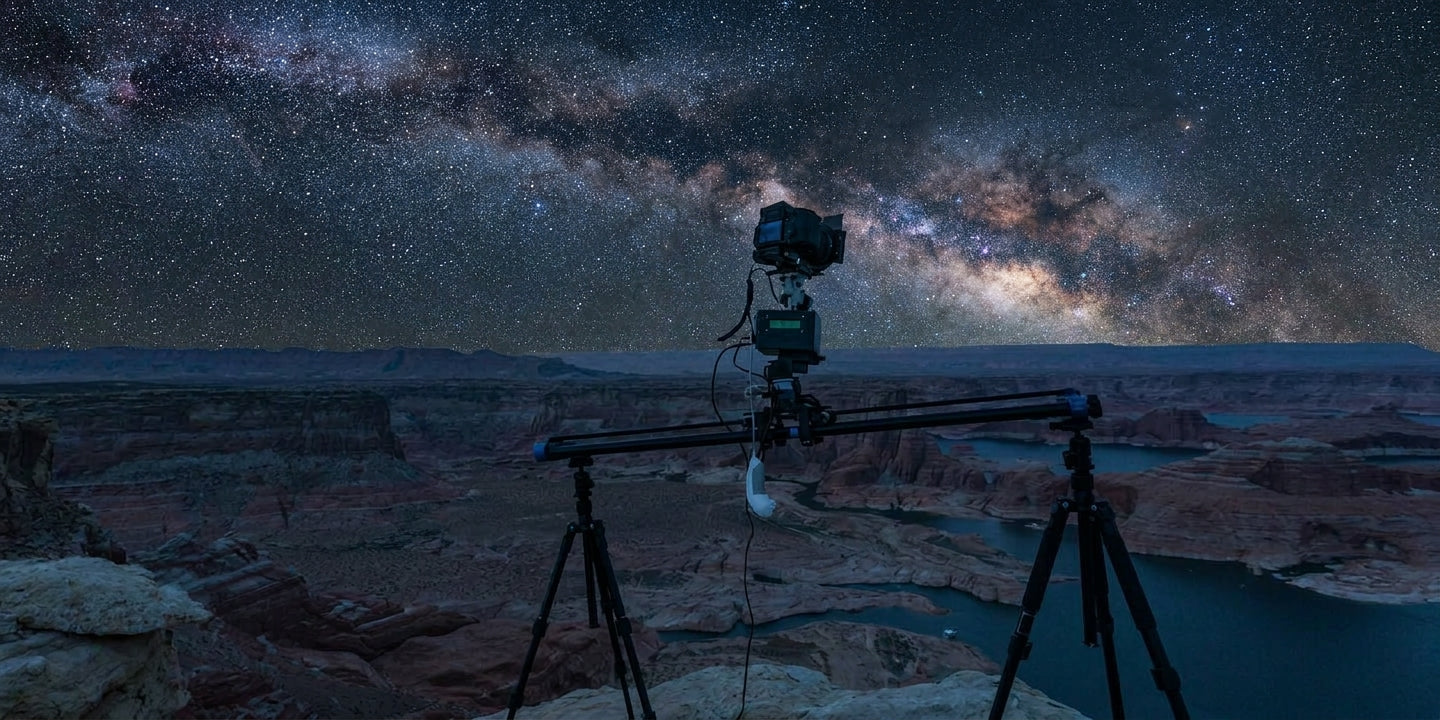
Most astrophotographers spend hours obsessing over their mount, camera, and optics. They research focal ratios, backfocus distances, and filter combinations until they can recite specs in their sleep. Then they grab whatever 12V battery is lying around and head to the field and wonder why their images from the second half of the night are never as sharp.
The battery you bring to a dark sky site does more than keep the lights on. It affects your mount's tracking accuracy, your dew heater reliability, and whether your capture software keeps running until sunrise or quits at 2 AM. Getting this part of your setup right is simpler than most people expect, but it starts with choosing the right battery chemistry.
Why Your Battery Choice Matters More Than You Think
When you're shooting deep-sky objects, your entire imaging train depends on stable, consistent power. An equatorial mount tracking at sidereal rate is doing precise, continuous mechanical work. Anything that disrupts the current feeding that motor shows up in your sub-exposures.
Voltage Drop Is the Silent Killer of Good Data
Lead-acid batteries do not deliver constant voltage. As they discharge, their output drops steadily from around 12.7V down through 11V and lower. Many GoTo mounts, particularly those running stepper motors, become measurably less accurate as input voltage falls. Autoguiding corrections grow larger. Periodic error becomes harder to model. By hour six of a session, you may be fighting your equipment without knowing why.
LiFePO4 (lithium iron phosphate) batteries maintain a flat discharge curve, staying close to 12.8V across most of their usable capacity before dropping off sharply near the end. This means the motor driving your Right Ascension axis at 3 AM gets nearly the same voltage it got at 10 PM. That voltage stability translates directly into tighter guide stars and cleaner sub-frames.
Weight and Portability at Dark Sky Sites
If you image from your backyard, weight is not a top concern. But serious astrophotographers know that the best skies usually require a drive and a walk. Bortle 3 and 4 sites (dark sky locations with minimal light pollution) are often reached on unpaved roads or short trails, and every pound in your kit matters when you are carrying a mount, tripod, optical tube, camera bag, and power supply.
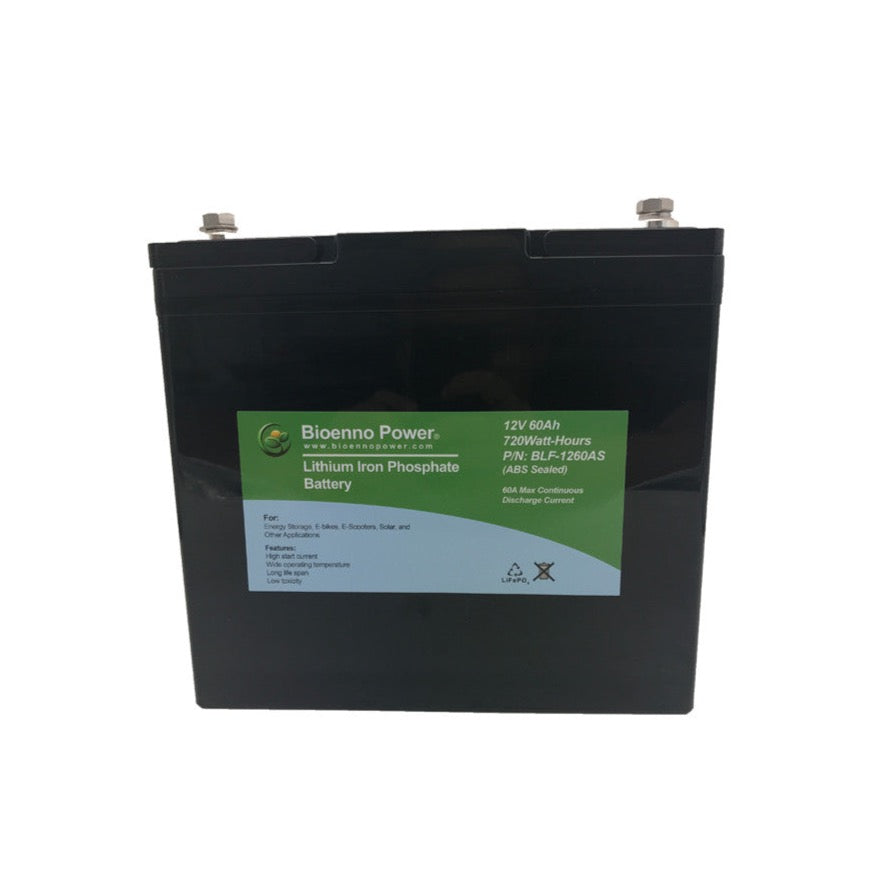
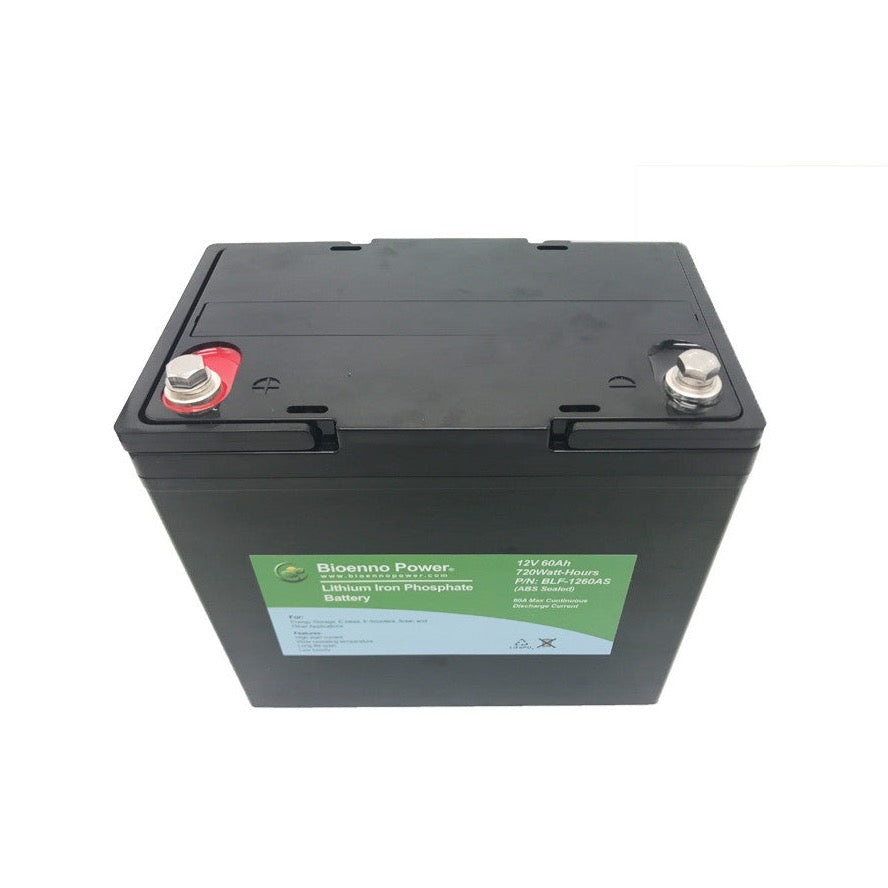
A comparable 50Ah sealed lead-acid battery weighs roughly 35 to 40 pounds. A Bioenno LiFePO4 battery at the same capacity comes in well under half that weight. Carrying a lightweight battery to a remote site is not a luxury, it is the difference between using the good site and staying home.

How Much Power Does an Astrophotography Setup Actually Need
Before you choose a battery, it helps to understand what your imaging rig actually draws. Many beginners overestimate or underestimate their amp-hour needs, and either bring more battery than they can carry or run dry before astronomical twilight.
Calculating Amp-Hours for a Full Night Session
A realistic mid-level deep-sky imaging rig draws roughly the following:
- Equatorial GoTo mount (belt-driven): 2 to 5 amps
- Dew heater controller with two to three strips: 1 to 3 amps
- DSLR or mirrorless camera: 0.5 to 1 amp
- Laptop or mini-PC for capture software: 2 to 4 amps via DC adapter
- Electronic focuser, accessories, and red lighting: 0.5 to 1 amp
Add those up and a full rig runs between 6 and 14 amps at 12V, depending on dew conditions and how aggressively you're running the heaters. For an eight-hour session at an average draw of 8 amps, you need 64 amp-hours, and that is before applying a safe discharge buffer.
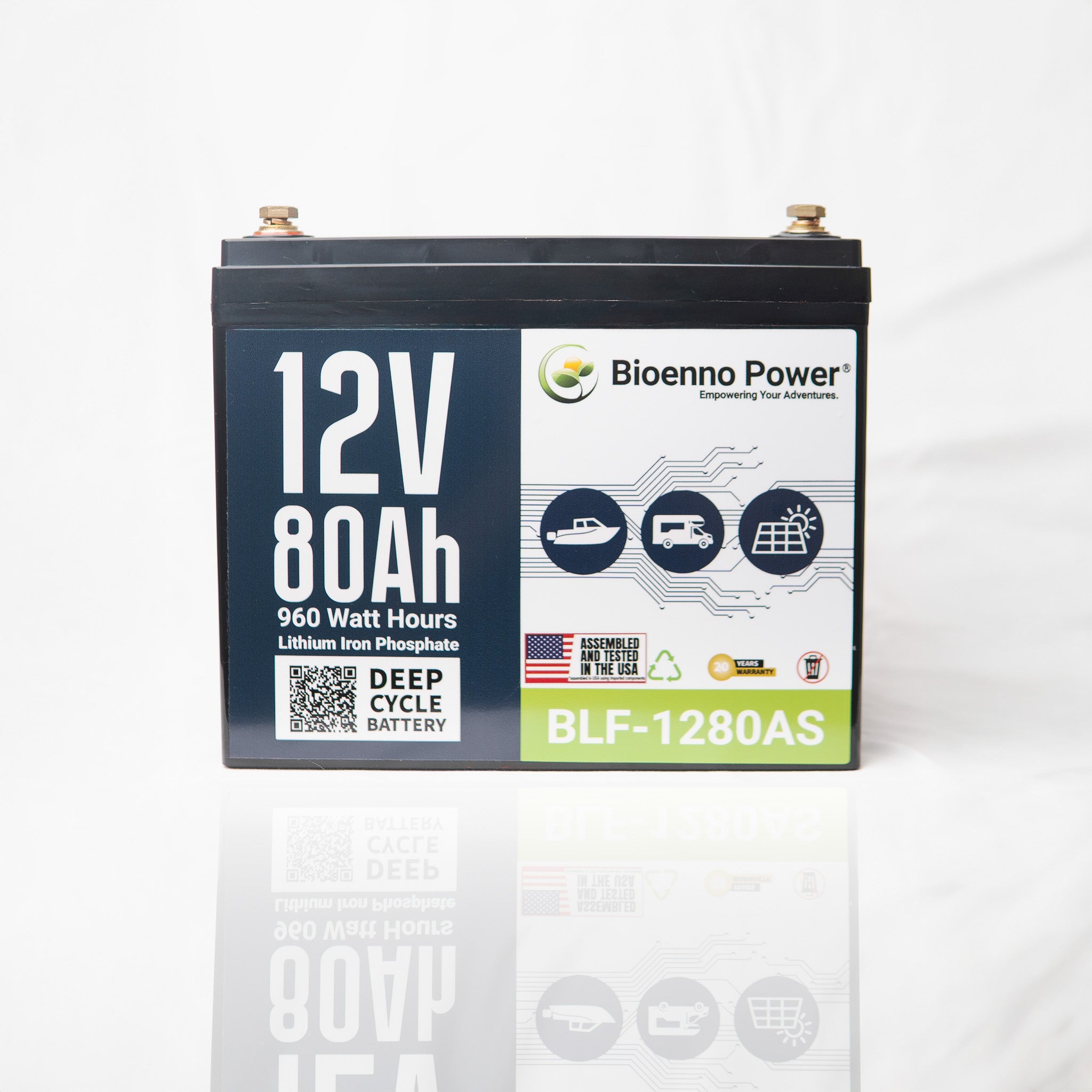
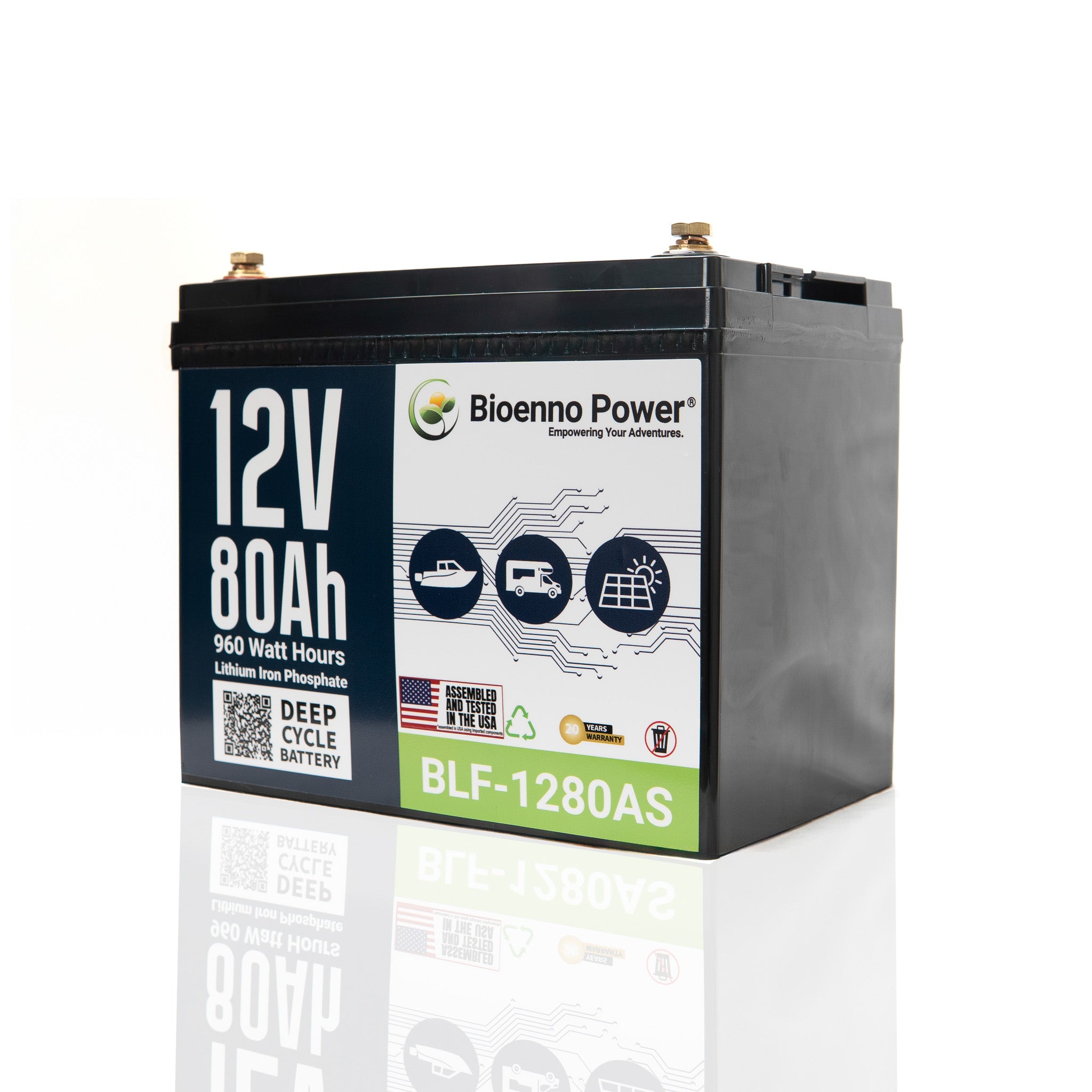
The practical rule: size your battery so you use no more than 80 percent of its rated capacity per session. A 50Ah battery covers a modest setup. A 80Ah or 100Ah battery handles a full rig with margin to spare.
For example: a mount drawing 3 amps, a dew controller at 2 amps, a camera at 0.8 amps, and a laptop at 3 amps totals 8.8 amps. Over an 8-hour session that is 70Ah, so a 100Ah battery gives you a comfortable margin with roughly 30Ah to spare.
The Gear That Draws the Most Current
Dew heaters are often the biggest surprise. On a humid summer night, a controller running heated strips on your primary objective, camera lens or sensor, and finder scope can pull as much current as the mount itself. Cold, dry nights at altitude require less, but you cannot always predict conditions in advance.
Laptops are the other significant draw. Running capture software through a DC-to-barrel adapter adds 2 to 4 amps depending on your machine. If you can connect your laptop directly at 12V rather than through an inverter, you avoid the conversion losses and your battery runs longer.
Why LiFePO4 Batteries Outperform Lead-Acid for Imaging
The astrophotography community spent years using sealed lead-acid and AGM batteries because they were cheap and available. LiFePO4 has largely replaced them in serious field rigs for reasons that go beyond marketing.
Flat Discharge Curve Keeps Your Mount Tracking Accurately
As covered above, the flat discharge curve of LiFePO4 chemistry is a genuine technical advantage for equatorial mount users. You can review how LiFePO4 chemistry handles demanding portable and field applications on the Bioenno typical applications page, but the principle is straightforward: a battery that holds near-nominal voltage through most of its cycle keeps sensitive electronics running at their rated specs throughout the session.
For a mount like the Sky-Watcher EQ6-R Pro or an iOptron CEM40 mount which are common choices among dedicated imagers, stable input voltage means the mount's tracking model performs as designed from first light to morning twilight.
Cold-Night Performance and Reliability
Dark sky sites are almost always colder than your home imaging spot, and high-altitude sites can drop well below freezing even in summer. Lead-acid batteries lose capacity rapidly in cold weather, sometimes delivering only 60 to 70 percent of their rated amp-hours at temperatures near freezing.
LiFePO4 handles cold significantly better. Bioenno batteries include a built-in battery management system (BMS) that protects against over-discharge and maintains stable output across the temperature ranges typical of field use. When you are hours from home and the temperature drops unexpectedly, you want a battery that does not quietly lose capacity on you.

Choosing the Right Bioenno Battery Capacity for Your Rig
Bioenno Power offers LiFePO4 batteries across a wide range of capacities, from compact 12Ah units up to the 12V 100Ah and beyond. The right choice depends on your setup size and session length.
Lightweight Setups and Grab-and-Go Rigs
If you run a compact tracker like the Sky-Watcher Star Adventurer 2i with a mirrorless camera and no dew heaters, your draw is low. A 20Ah or 50Ah Bioenno battery covers a six- to eight-hour session with reserve power, and the weight savings are significant for backpacking to remote dark sites or packing into a camera bag for travel.
Note: the Star Adventurer 2i runs its tracking motor on internal AA batteries, so a Bioenno battery in this configuration powers your camera, any dew heat strips, and other accessories rather than the mount motor directly.
For grab-and-go visual astronomy with a GoTo mount and finder but no camera or heaters, a 12Ah battery is often sufficient for a full night. You can browse Bioenno's full lineup and compare capacities to match your rig.
Full Imaging Setups with Mount, Camera, and Laptop
For a complete deep-sky imaging rig running an equatorial mount, dew heaters, a camera, and a laptop, size up. A 50Ah battery is the practical minimum for a six-hour session. A 80Ah battery or 100Ah battery gives you a comfortable margin for an eight- to ten-hour night and handles higher dew heater loads without stress.
For multi-night expeditions or star parties that run two or three nights consecutively, pairing a 100Ah battery with a small solar panel lets you top off during daylight and arrive at each session with a full charge. Bioenno's solar product lineup is designed to pair with their LiFePO4 batteries for exactly this kind of extended field use.
Tips for Getting the Most Out of Your Battery in the Field
Getting the setup right before you leave saves you from troubleshooting in the dark.
Field Prep Before You Leave Home
A quick pre-session checklist makes the difference between a smooth night and a frustrating one:
- Charge your battery to 100 percent the day before, not the morning of, so you know the charge completed normally
- Check your total draw by listing every device that will run and estimating amps, then confirm your battery capacity covers 125 percent of that total
- Bring your charger if your site has vehicle power available, or a small solar panel for multi-night use
- Confirm your DC cables and connectors are the right gauge for your draw. Undersized wiring causes voltage drop before the battery even does
Recharging Between Sessions
Lithium iron phosphate batteries charge faster than lead-acid and do not suffer from the sulfation or memory effects that affect AGM batteries after partial cycles. Use a charger designed specifically for LiFePO4 chemistry, not a standard lead-acid charger. Bioenno sells matched chargers for their battery lineup, and using a properly profiled charger extends cycle life significantly. Compatible options are available in the battery charger collection.
Many Bioenno batteries are rated for 2,000 charge cycles at 80 percent depth of discharge; verify the spec on the product page for your specific model. For an imager who sessions 30 nights per year, that is many years of field use from a single battery.
Getting Started with Bioenno for Your Next Imaging Night
Choosing the right battery for your telescope setup comes down to one calculation: average amp draw multiplied by session hours, divided by 0.8 for a safe buffer. From there, pick the Bioenno capacity that meets that number and fits your weight budget for the site.
The result is a power system that holds steady voltage all night, weighs a fraction of an equivalent lead-acid battery, handles cold temperatures without surprise capacity losses, and runs without noise or fumes that would make it impractical at any dark sky site.
For additional real-world setup guides and application ideas from Bioenno's user base, the Bioenno blog is a useful resource. When you're ready to match a battery to your rig, the full Bioenno LiFePO4 lineup is available by capacity and voltage.