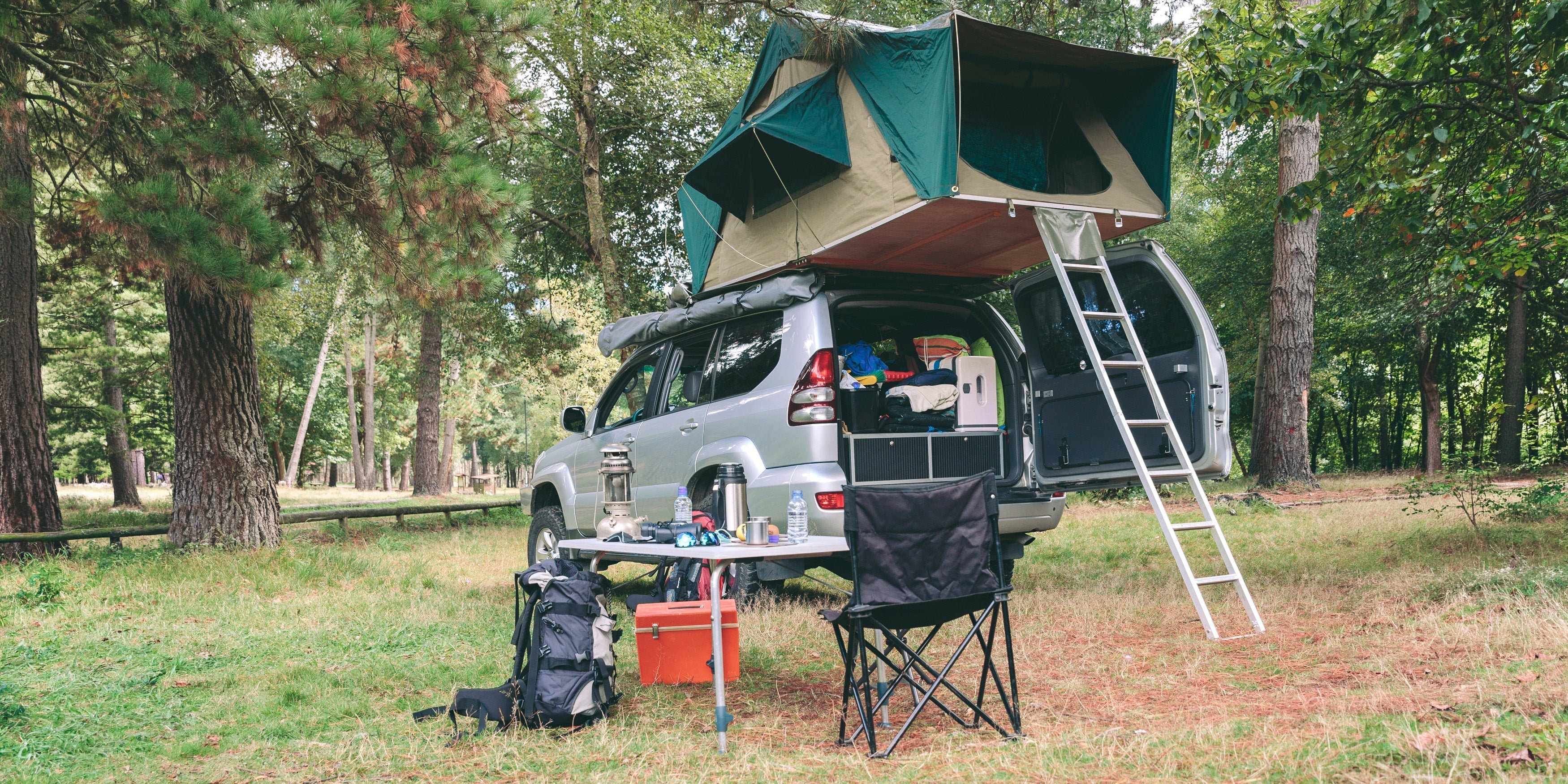
A weekend off-grid trip is the perfect time to find out whether your power setup is dialed in or barely hanging on. If you have ever watched your lights dim, your phone charger slow to a crawl, or your cooler shut off halfway through day two, you already know the problem: you did not bring enough usable battery, or you brought the wrong kind.
The good news is you do not need an electrical engineering degree to choose the right battery. You just need a quick way to translate “what I want to run” into battery capacity, then sanity-check your plan against how you will recharge while you are out.
Step 1: List what you actually want to power
Start with the real goal of the trip. Are you aiming for “basic comfort” or “work remote and live normally”? Your load list changes a lot.
Keep this simple: write down the devices you will use and how long they will run each day. If you are not sure, estimate. A slightly conservative estimate is better than a perfect spreadsheet that assumes ideal conditions.
Here is a common weekend mix (and the questions that matter):
- A 12V fridge or cooler: Is it running 24/7, and how hot will it be outside?
- Phone, camera, tablet charging: Will you be filming, editing, or just charging overnight?
- Lights and fans: Are you running them for an hour or most of the evening?
- Laptop or Starlink: Are you working, or just checking in?
That list is intentionally short. Your goal is not to model every watt. Your goal is to avoid surprises.
Step 2: Convert your “stuff” into watt-hours (Wh)
Watt-hours are the simplest way to compare energy across devices.
If a device label shows watts (W), then Wh = W × hours.
If a device label shows amps (A) at 12V, then Wh ≈ (A × 12V) × hours.
Real-world note: anything with a compressor (like a fridge) does not draw constant power. It cycles on and off, and it draws more when it starts up. Hot weather, poor ventilation, and frequent lid openings all raise usage.
If you want a fast estimate for a weekend, assume your total daily usage is higher than your “perfect day” number. That buffer is what keeps a fun trip from turning into battery triage.

Step 3: Decide whether you need 12V, 24V, or 36V
For most weekend off-grid trips in an RV, van, SUV, or camp trailer, a 12V battery system is the simplest and most common.
You typically move to higher voltage when you have a specific load that demands it, like a 24V or 36V trolling motor, or a higher-power build where reducing current helps with cable size and efficiency.
If you are building a setup around a trolling motor or a high-output inverter, decide voltage first. Your battery choice follows that decision.
Step 4: Size battery capacity the way you will actually use it
Battery capacity is usually shown as amp-hours (Ah). On a 12V system, you can estimate energy like this: Wh ≈ Ah x 12V.
So a 12V 100Ah battery is roughly 1,200Wh of energy.
But here is the key point: you rarely want to plan to use 100% of any battery. A safer planning approach is to size around usable capacity and keep a buffer.
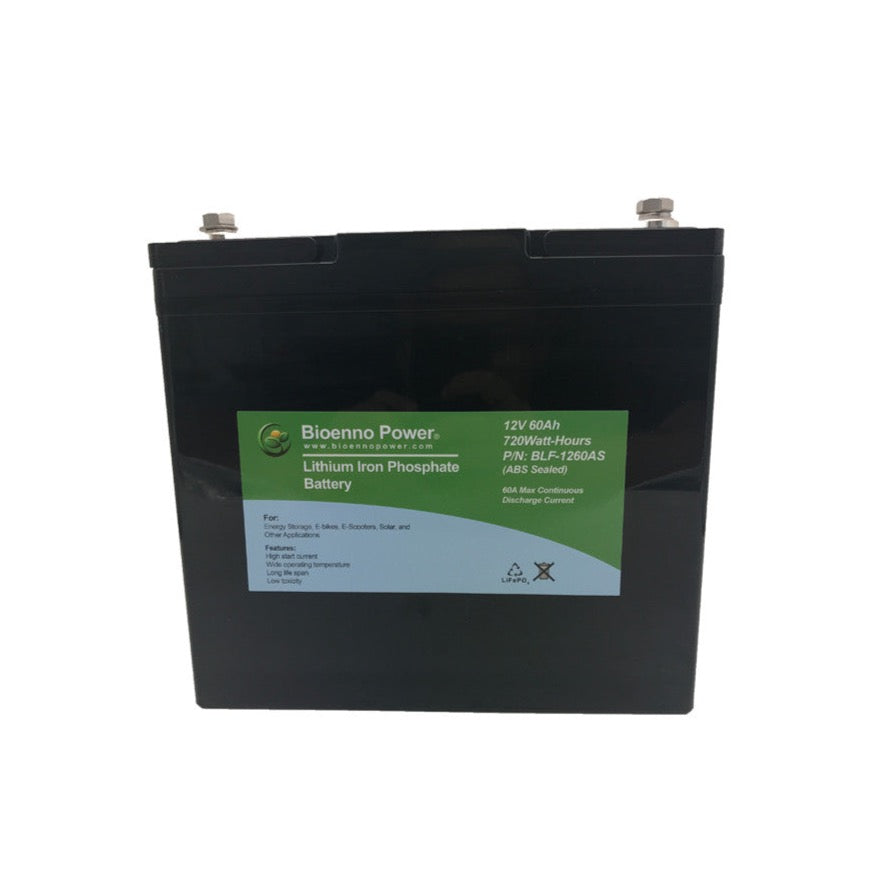
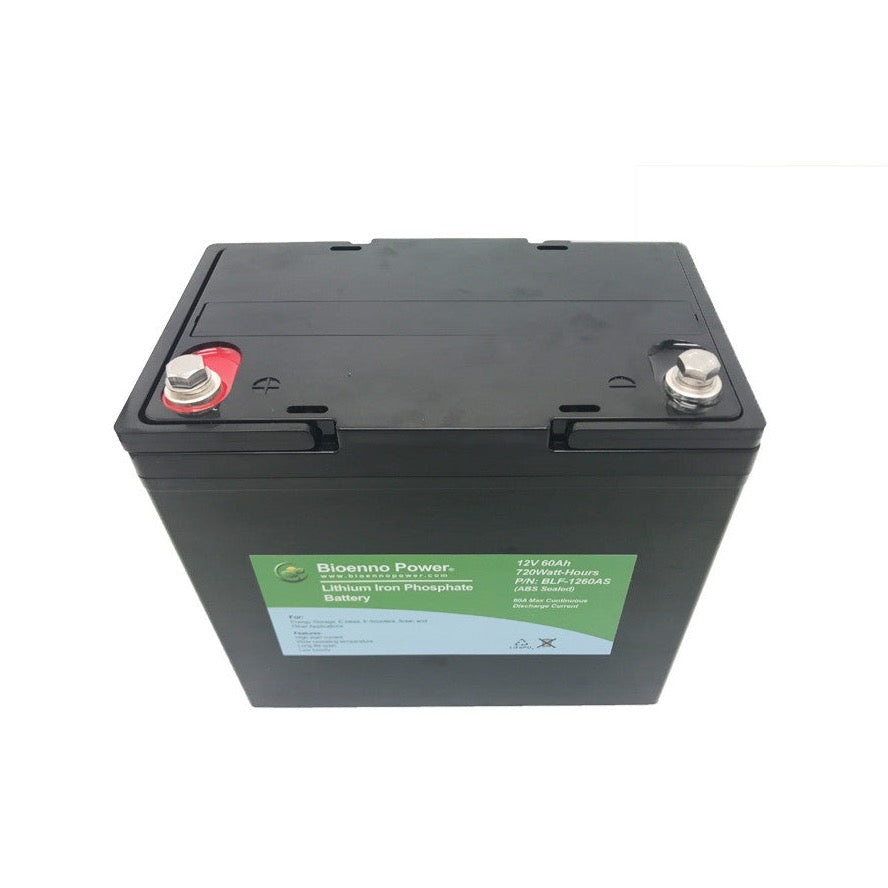
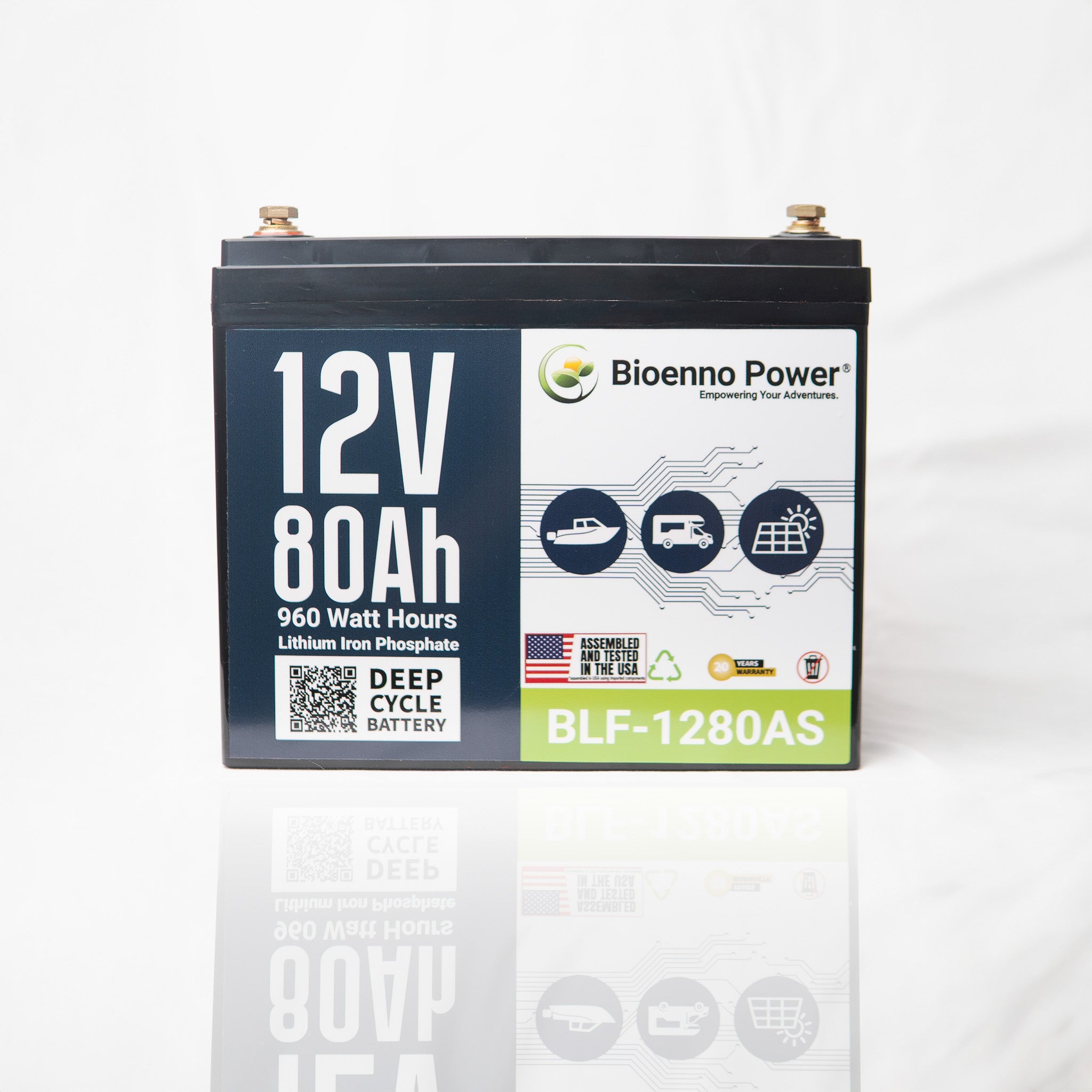
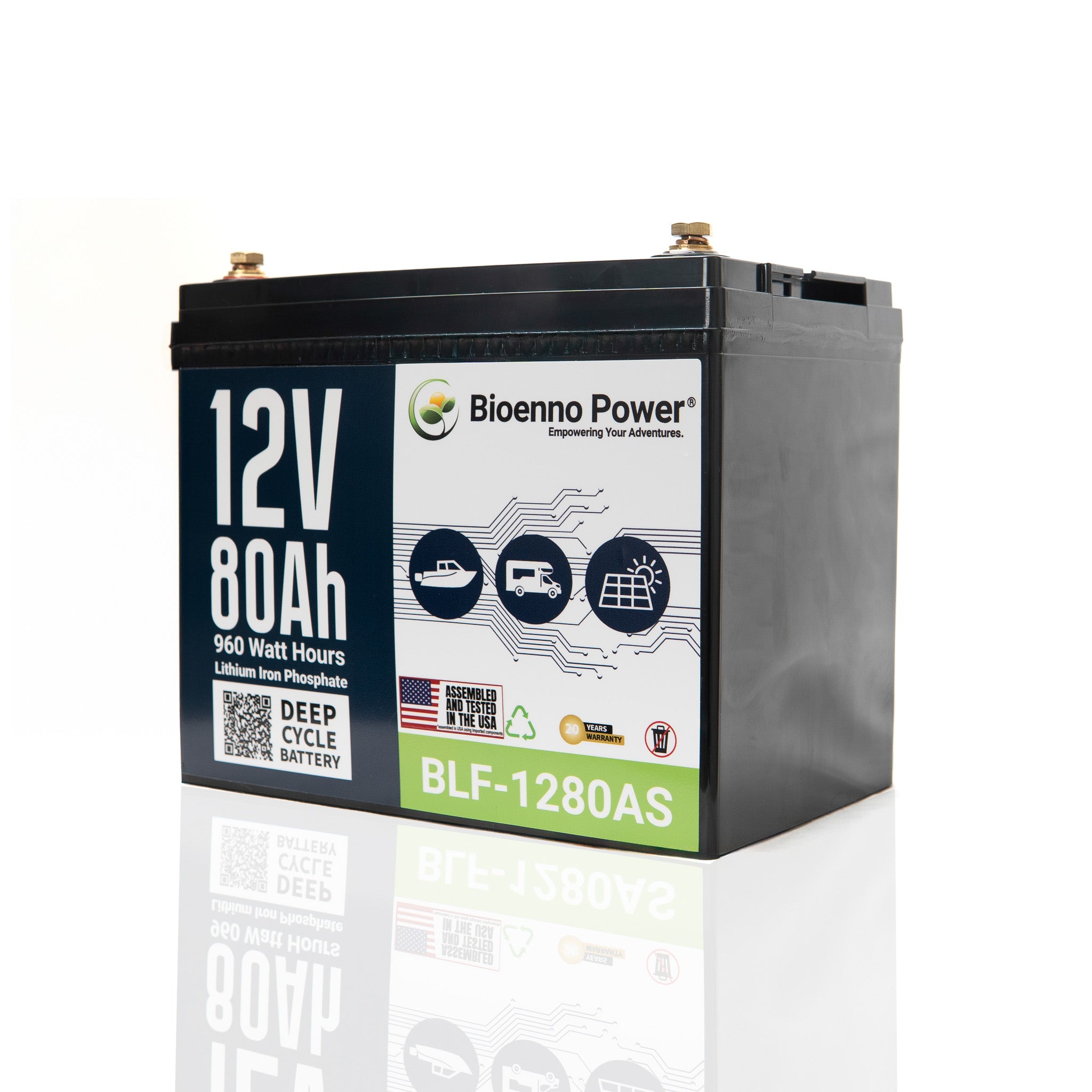
LiFePO4 (lithium iron phosphate) batteries are popular for off-grid use because they are lighter than lead-acid options and deliver more consistent voltage under load. That consistent power matters when you care about fridge performance, electronics stability, or anything that gets annoying as voltage sags.
If you are coming from lead-acid, the mental shift is this: do not choose capacity based on what you used to do. Choose it based on what you want your weekend to feel like. Quiet, simple, and reliable is usually worth a little extra capacity.
Step 5: Plan your charging before you leave the driveway
Your battery does not exist in isolation. Your charging plan determines whether you are coasting all weekend or sweating your percentage display.
Most weekend plans use one or more of these: alternator charging while driving, solar charging during the day, and shore power before you leave and after you return.
If you will not be driving much and you do not have solar, then you are living entirely on stored energy. In that case, your battery needs to cover the whole weekend with margin.
If you do have solar, remember that clouds, shade, short winter days, and campsite orientation all reduce what you will actually get. Solar is excellent, but it is not a guarantee.

Step 6: Avoid the two most common mistakes
Most weekend off-grid power problems come down to one of these.
First, undersizing the battery because the load estimate was too optimistic. This shows up fast with fridges, fans, and laptops. People often forget how many small charging needs add up.
Second, leaning too hard on an inverter for things that could run on DC. Inverters are useful, but they add conversion losses and can turn a modest weekend setup into a bigger, more expensive system.
If you want your setup to feel effortless, prioritize running DC loads directly when practical and reserve the inverter for the essentials.
Step 7: A simple “weekend-ready” checklist
Before you buy anything, do a final pass with these questions:
- What is my daily energy use estimate in Wh?
- Am I planning for usable capacity with a buffer, not a perfect scenario?
- Do I know my system voltage (12V, 24V, 36V) based on my biggest load?
- How will I recharge, and what happens if that recharge underperforms?
If you can answer those four questions, you will make a much better battery decision than someone who shops by “biggest Ah for the lowest price.”
What to do next
If you are ready to choose a LiFePO4 battery that fits your trip, start with Bioenno Power’s battery lineup and match your capacity and voltage to the plan you just built: Shop now (https://www.bioennopower.com/collections/all).
If you want to explore more off-grid and portable power education, you can browse the Bioenno blog here: Bioenno Power News (https://www.bioennopower.com/blogs/news).
And if you are building a system (not just buying a single battery), it helps to understand how batteries and solar charging work together in real conditions. A solid starting point is Bioenno’s solar collection: Shop solar and charging accessories (https://www.bioennopower.com/collections/solar) (best guess link, verify).